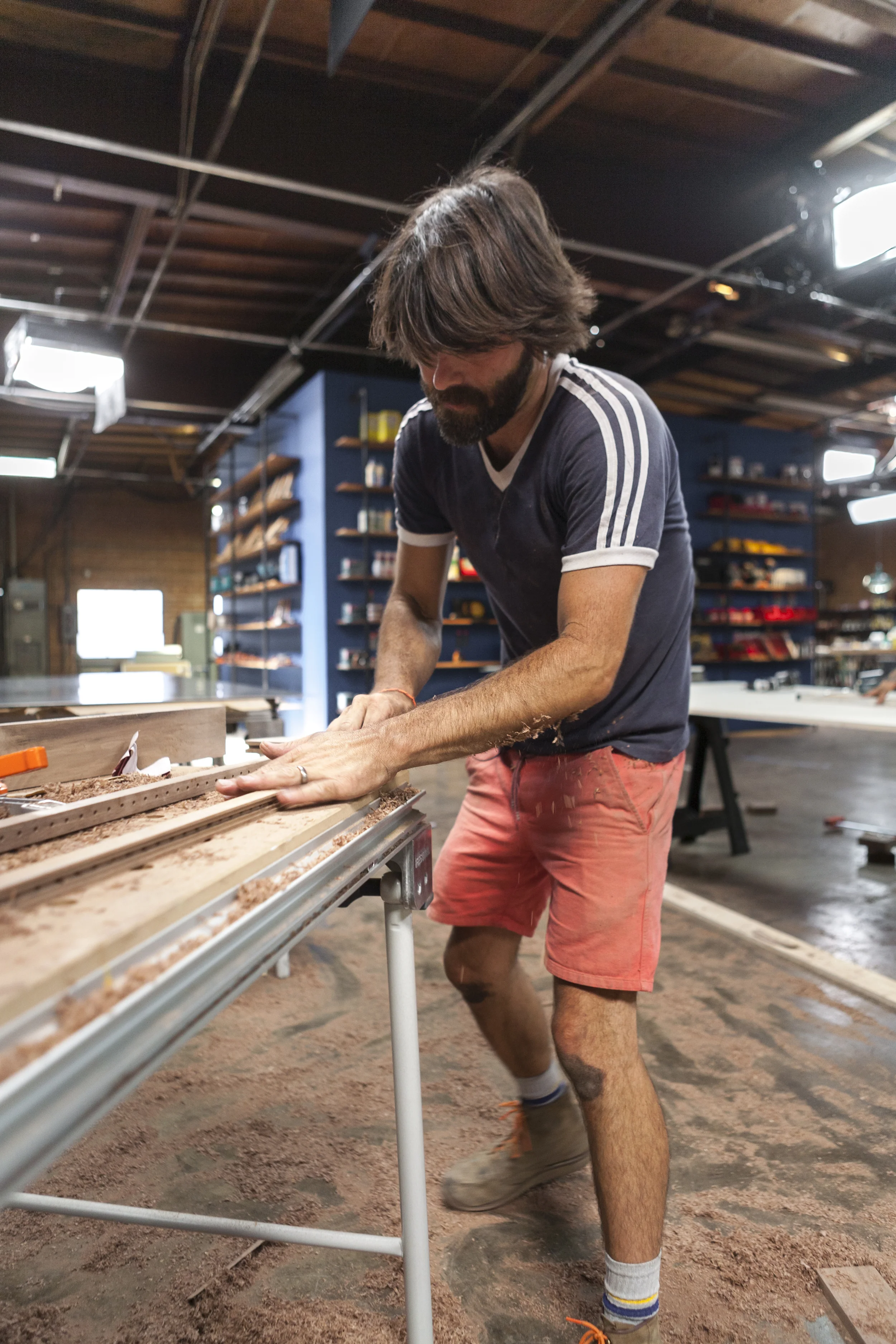
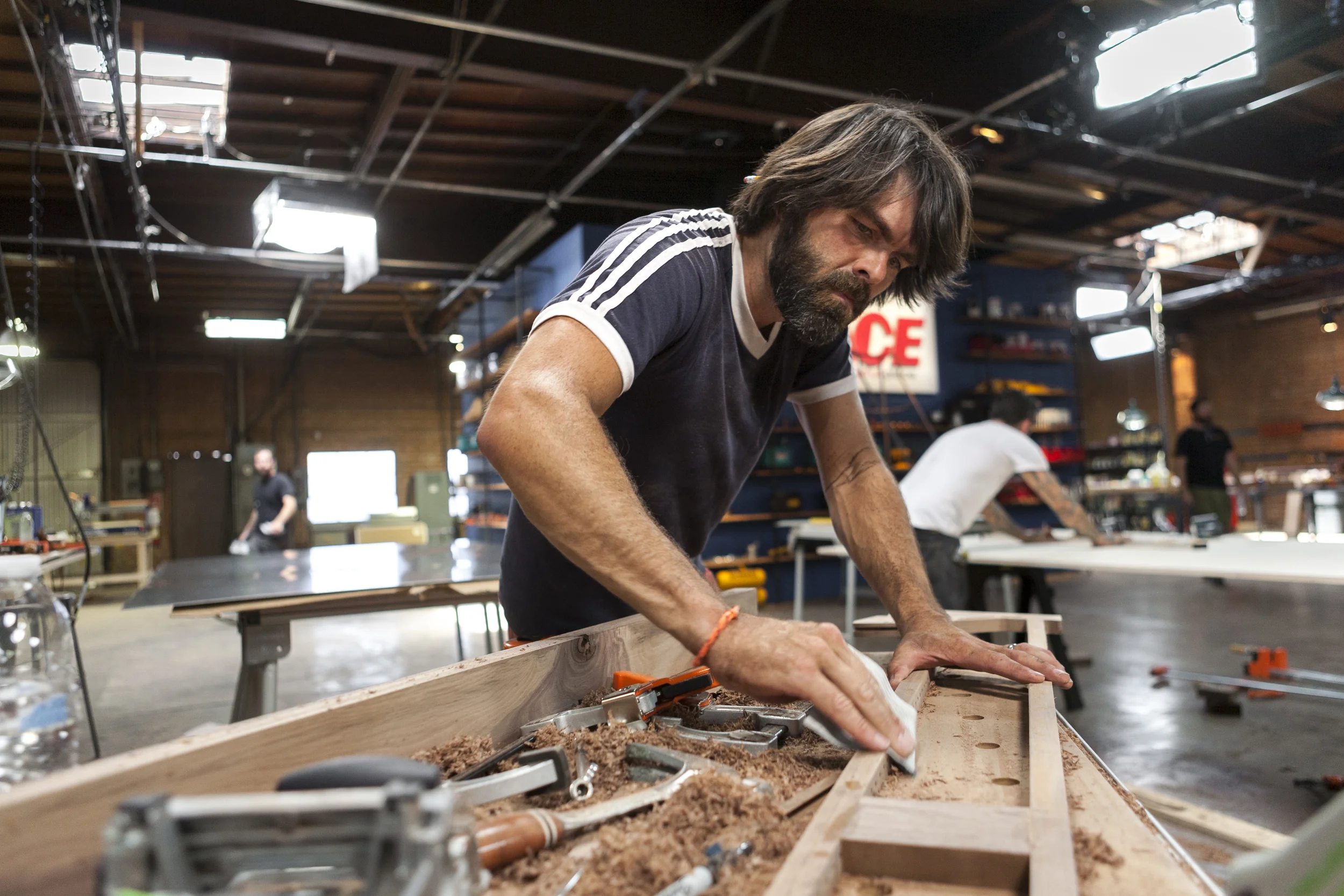
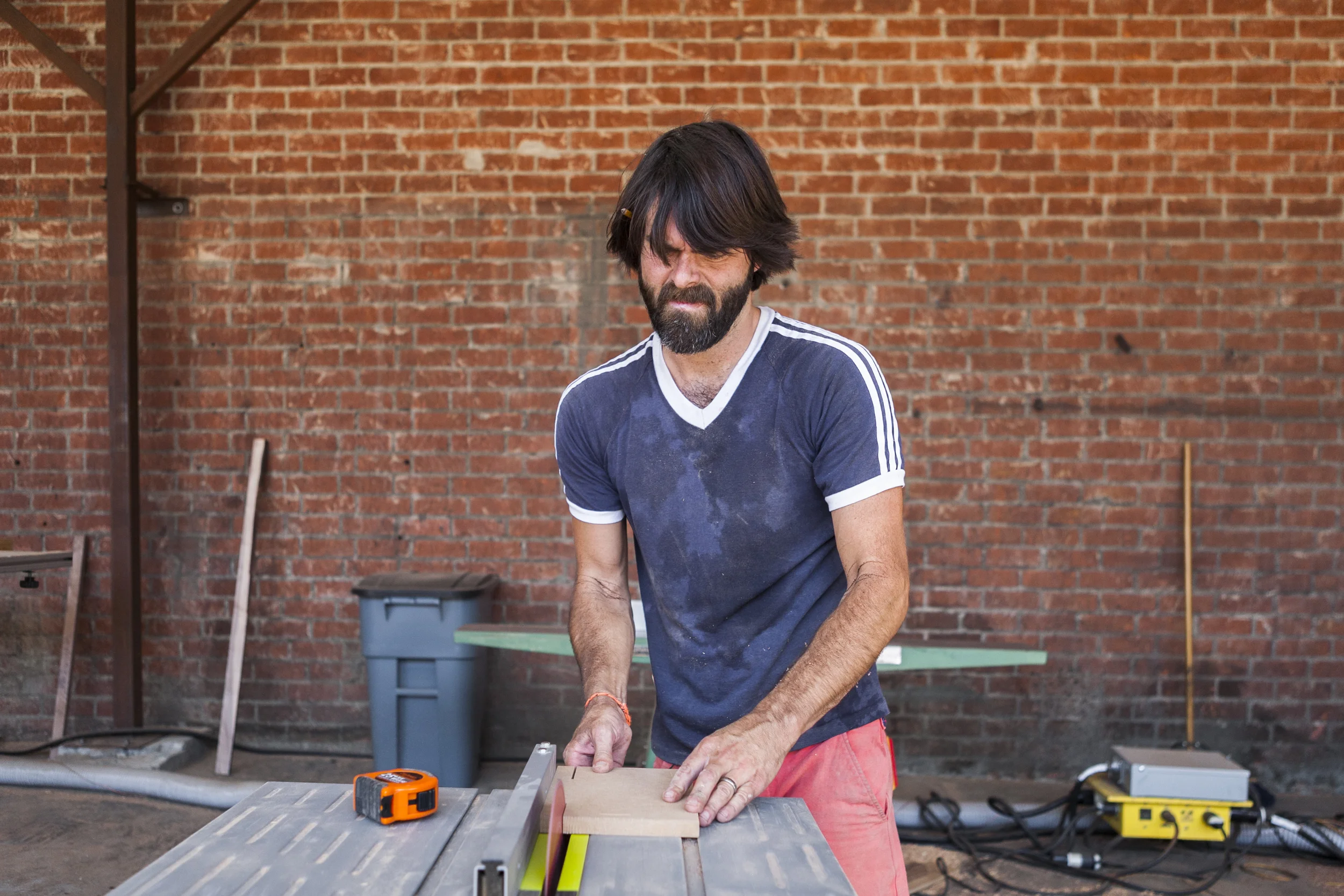
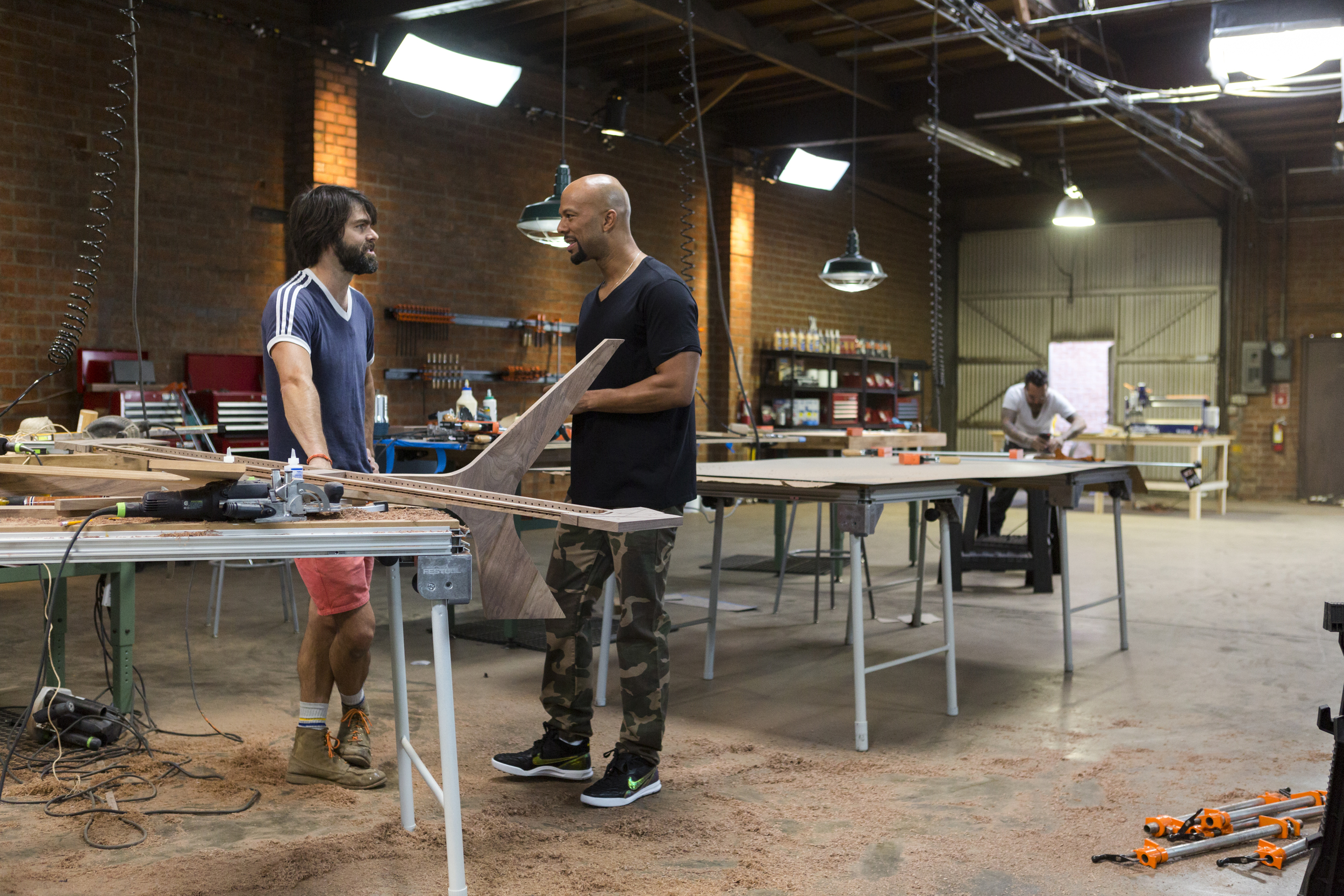
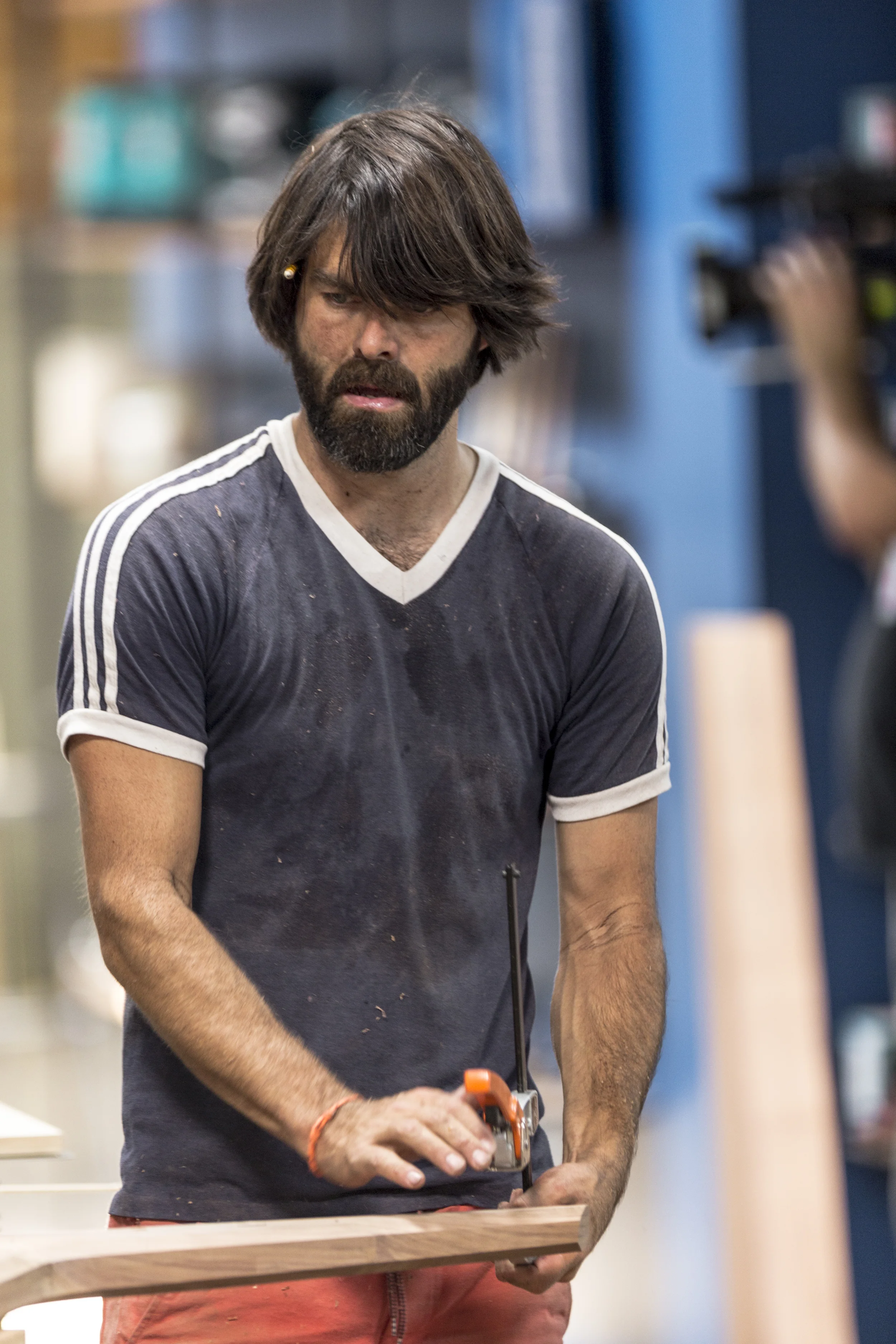
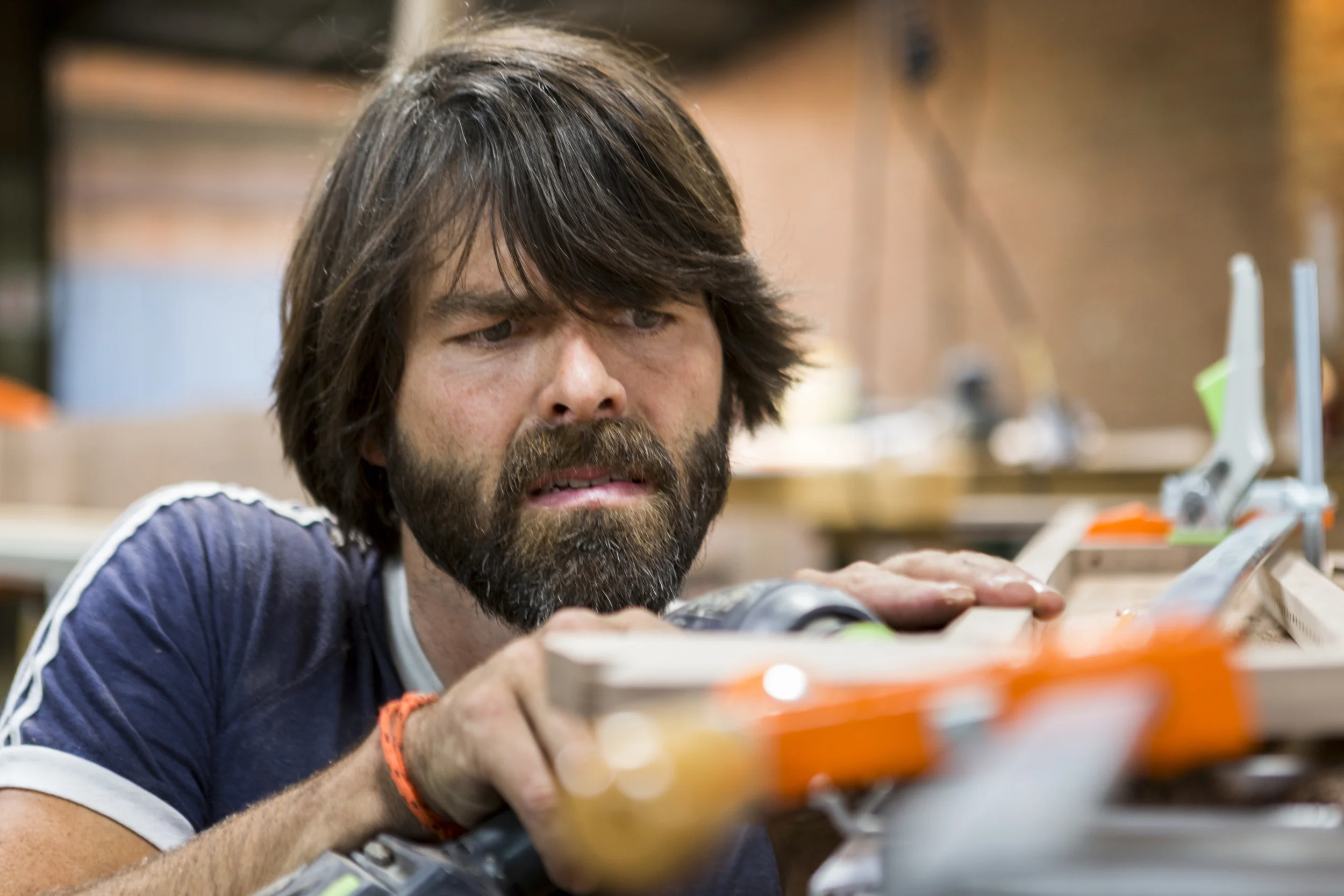
Follow Up on the Show

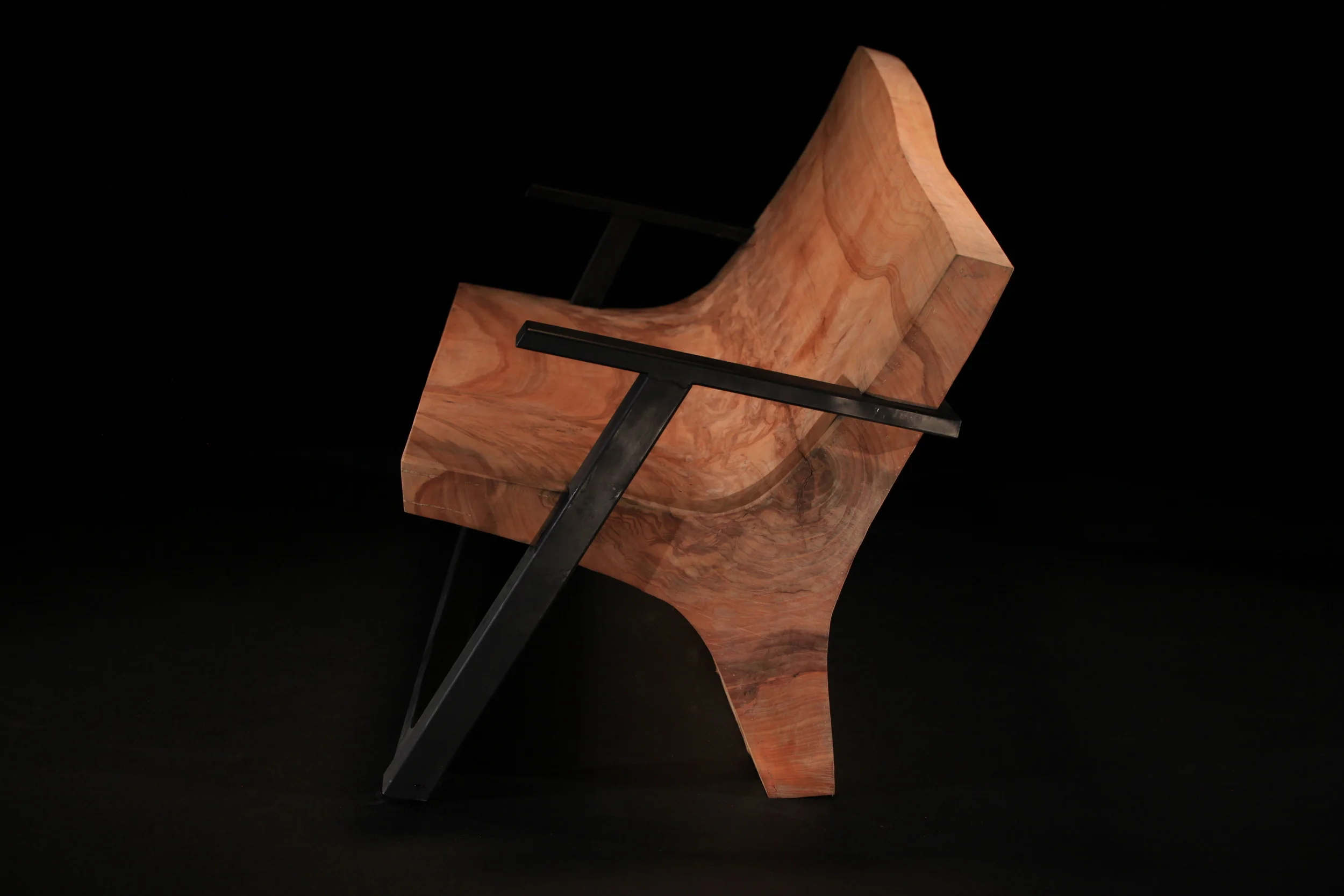
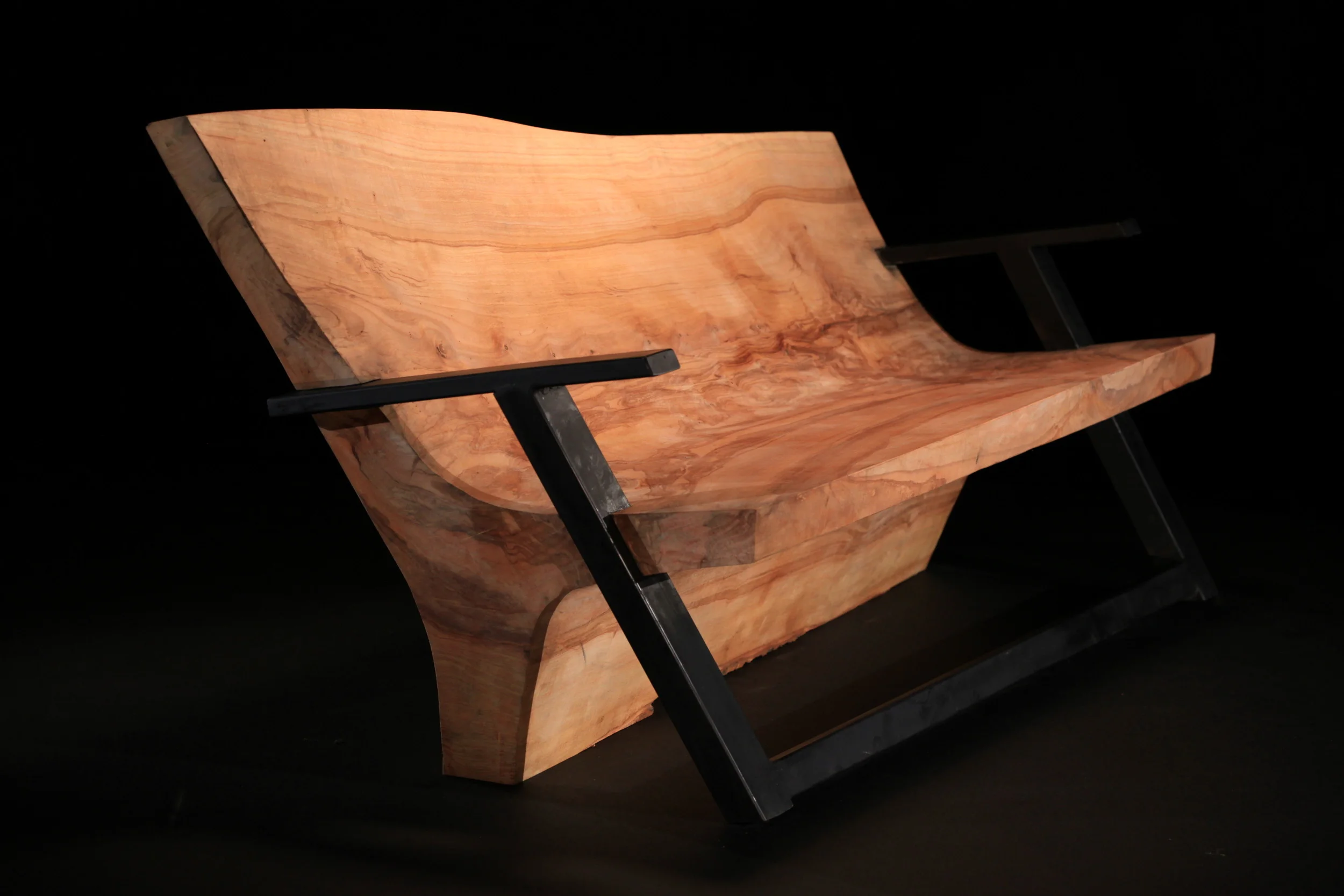
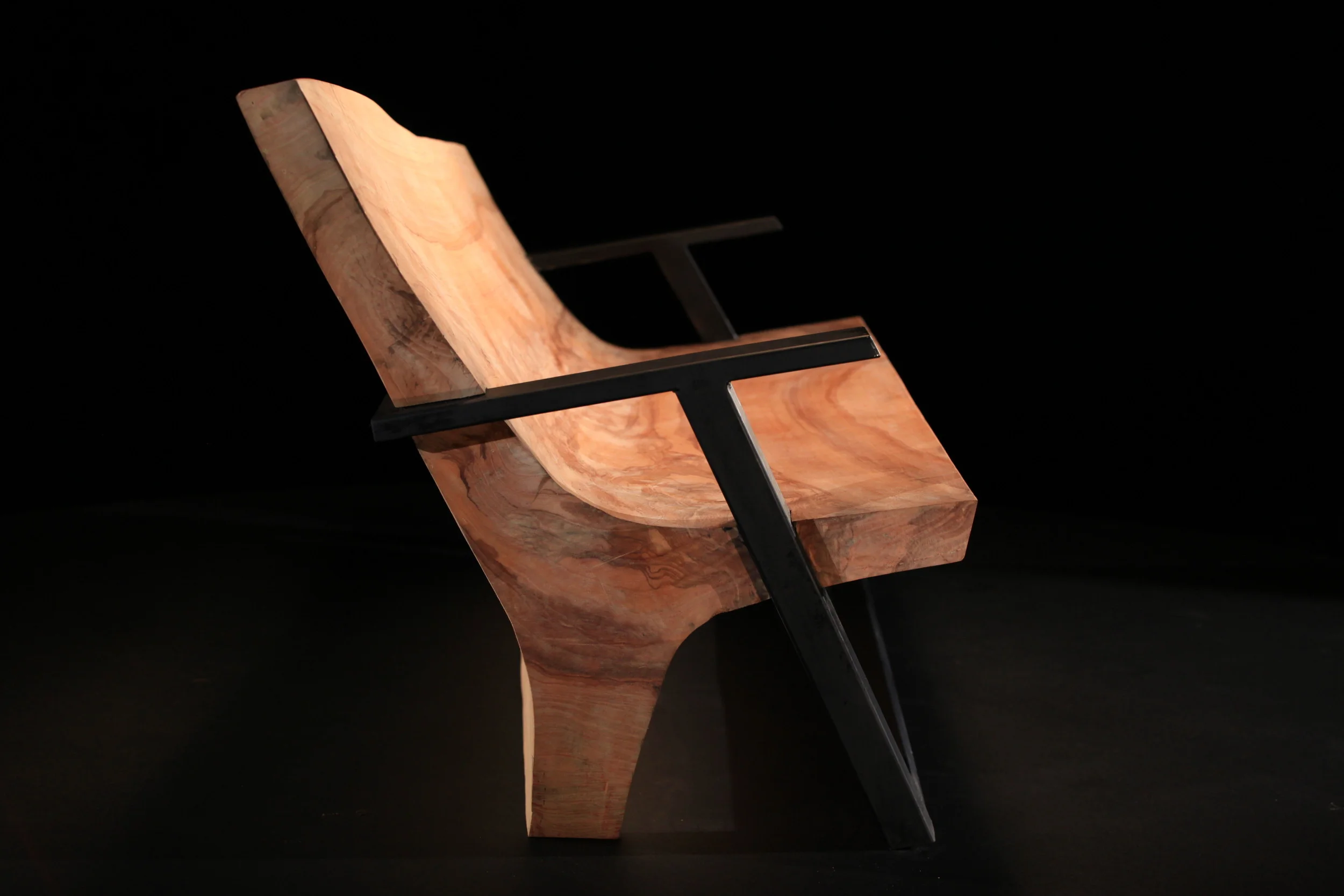
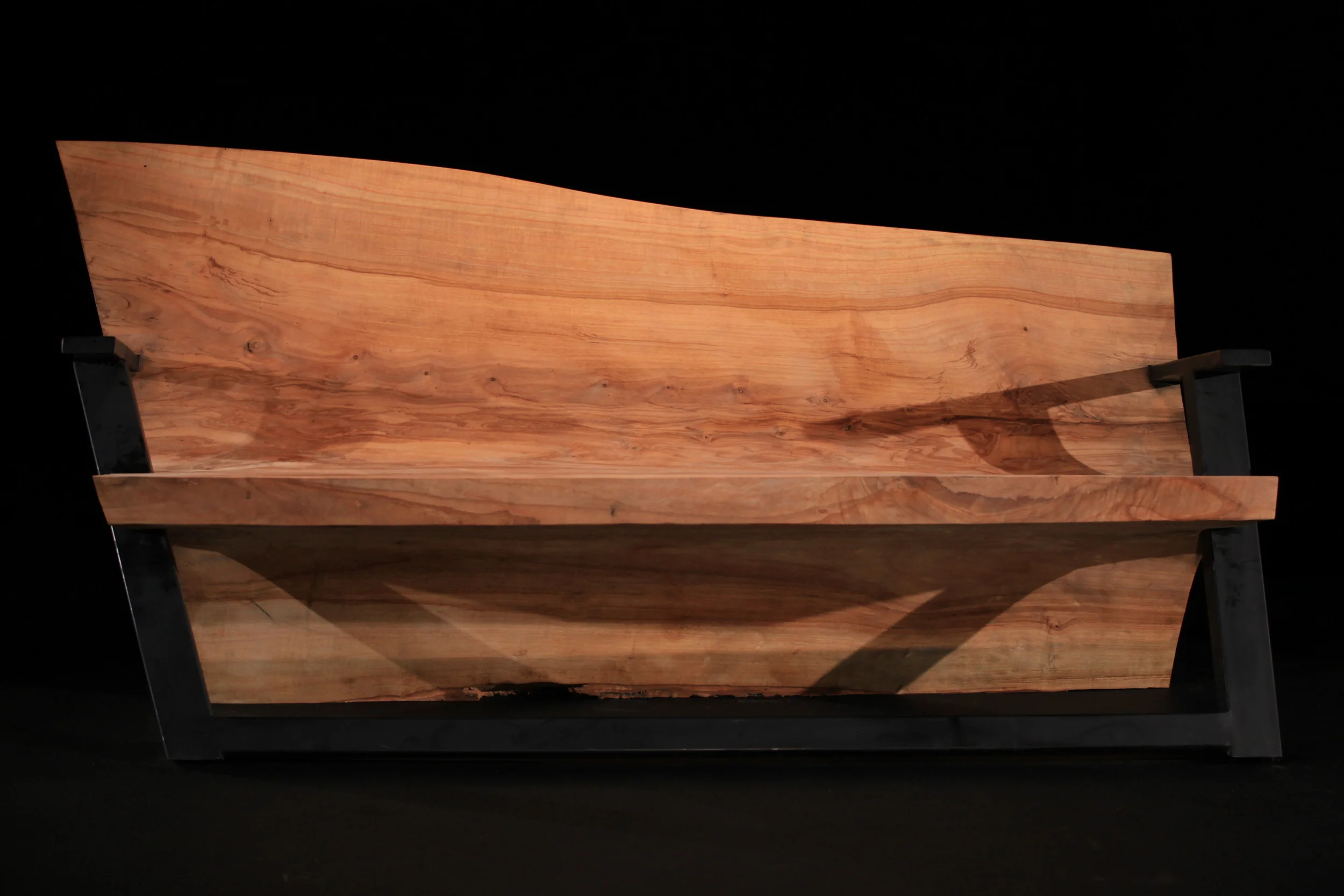
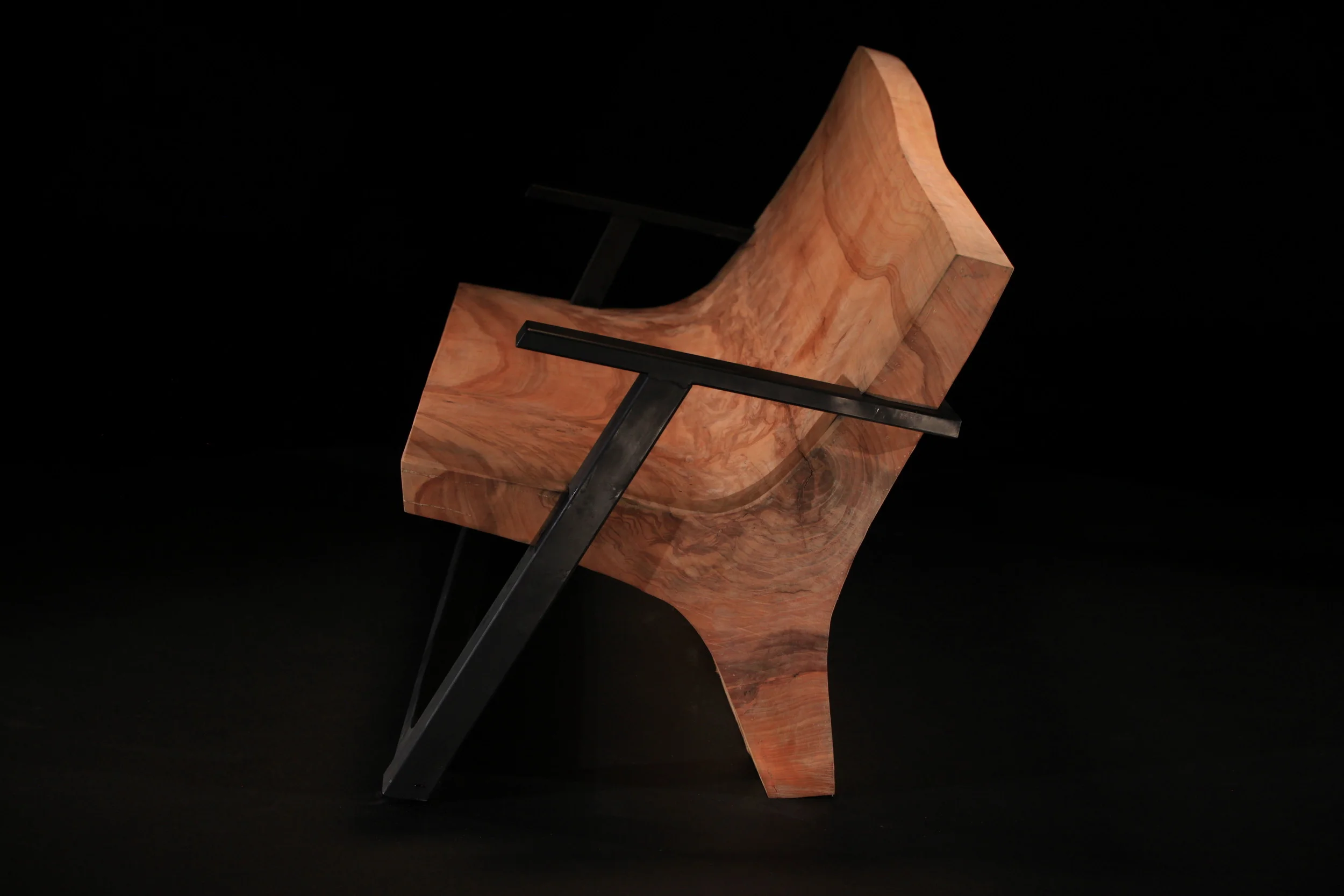
Last night was the premier of Framework. We don't even own a TV so my Reality TV knowledge is pretty weak. It was nerve racking but I thought they did a great job. Thanks Spike for making my "boat chair" look better than I remember, although it still hurt to look at for me.  

It was the first episode, so naturally they spent a lot of time on introducing everyone and helping people "get to know" the contestants. There was very little time for the content I am looking forward to, which is the woodworking. 

Driving to work this morning I decided I am going to try and focus my blog on the process of what we did on Framework. There will be plenty of drama but I learned so much from this experience that I want to share. Things that have made me a better designer. They can't fit everything into 42 minutes, so I think it could be fun to fill you in with a few interesting details that made this show so interesting for me. 


See you next Tuesday. 
 

Jory

What Makes the Hank Chair Jory Brigham a Standout Piece of Furniture?

What Makes the Hank Chair Jory Brigham a Standout Piece of Furniture?

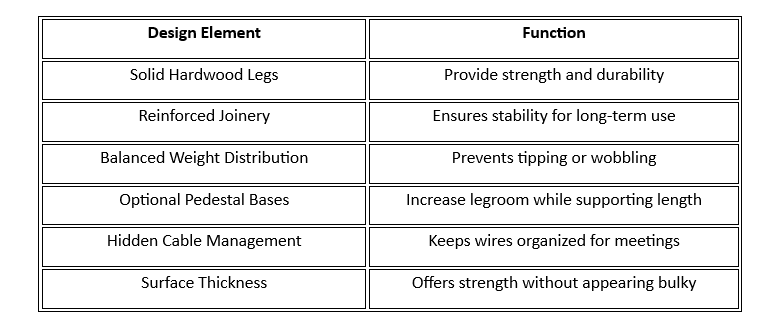
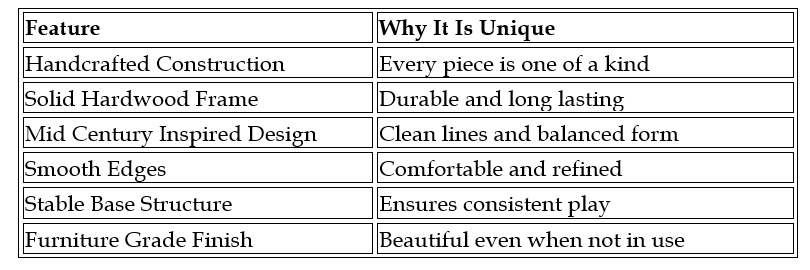
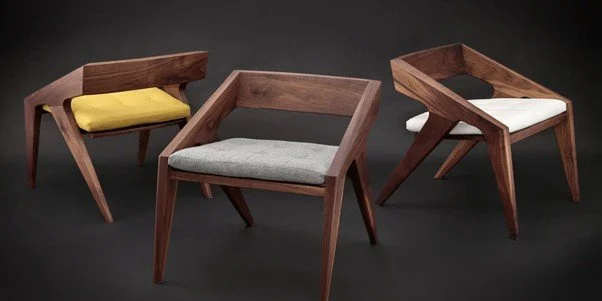
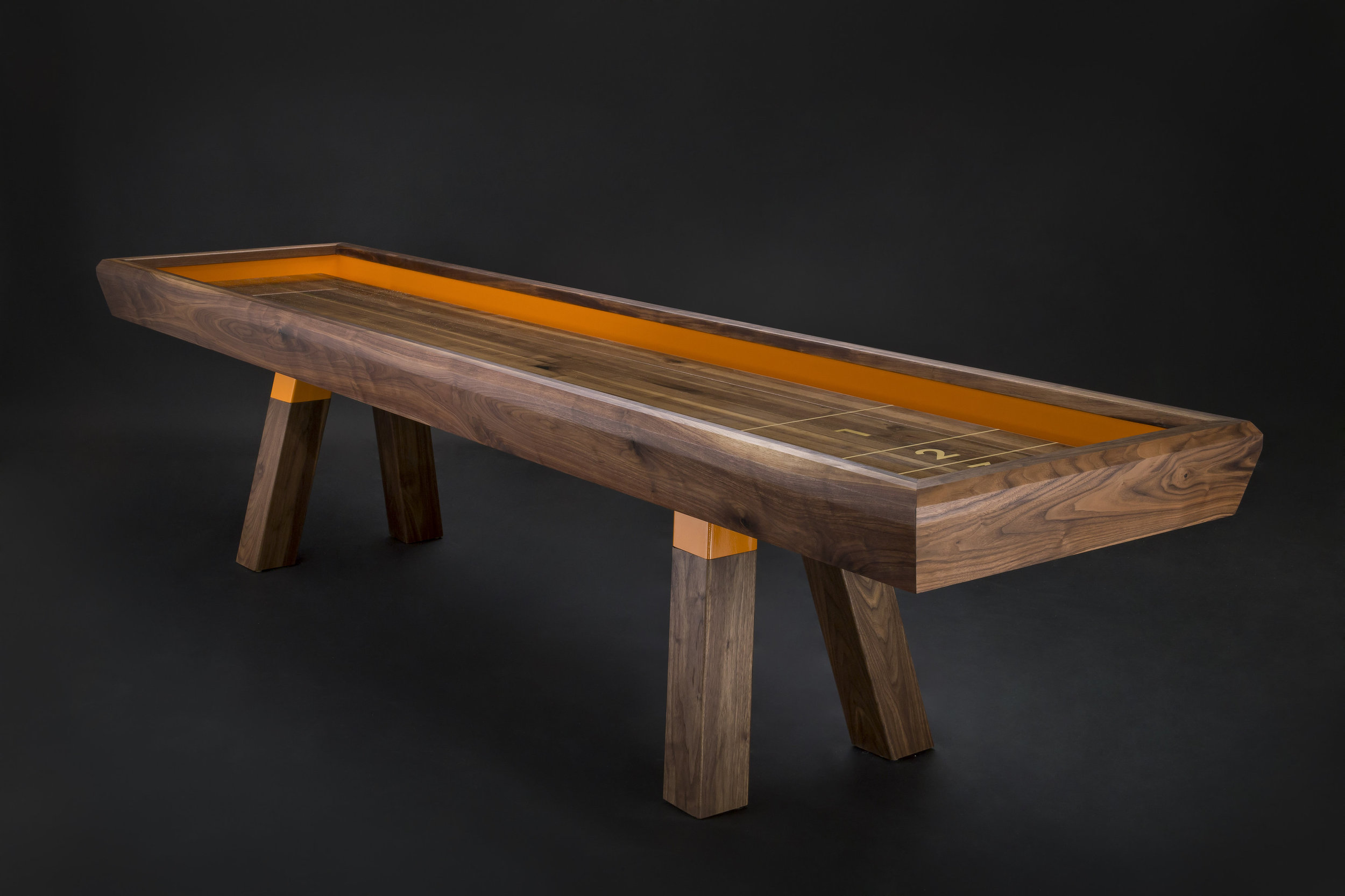
The Hank Chair by Jory Brigham stands apart from standard lounge chairs through its thoughtful design, handcrafted construction, and refined mid-century aesthetic. Featuring flowing curves with no rigid angles, premium hardwood materials, and versatile functionality, it offers a level of comfort and individuality that mass-produced lounge chairs simply cannot match. This comparison highlights why the Hank Chair is not just seating, but a functional work of art designed for everyday living.

The Aftermath

In order to really explain what is happening with myself and the business int the aftermath of Framework, I will first explain why I did the show in the first place.  

I have always felt in my soul, that if given the opportunity to build whatever I wanted, whenever I wanted, I could be successful, and not only successful but fulfilled and content.  I think everyone is meant to do something, something we were created specifically to do.  We don’t all find what that is, but I’ve always been grateful that I have, and that I figured it out fairly early on in life.  

When I got the call from SpikeTV in March of last year, I was very skeptical for obvious reasons.  I didn’t want reality TV to cheapen my craft, or even my dreams for that matter.  When it all comes down to it, I really don’t trust that industry for being genuine.  I weighed the positive and the negative, and I agreed to do it for one reason:  I thought I had a pretty good chance to win. And If I did, I could take the prize money home and dump it into my business.  

For the past 10 years or so, I have been focusing so much on designing and building, that I have had the tendency to let the other important things in the business slide, the main one of those being marketing.  Although I’ve always known about where I stand, I had never really pointed all efforts to one consistent direction and committed to it.  

After finishing the show in November, we decided to completely overhaul the website.  This was a great way to create a narrative on who this brand is, and what we stand for.  I always knew that I never wanted to compromise quality in any way, but the issue always was “do people really know the difference?”.  Most of them do not, but I recently have come to the realization that it is up to us, along with every other handmade American furniture maker to educate them.  We can’t expect to change the mindset that has been enabled and accepted for so many years just by simply doing what we believe in.  We have to convey these principals and standards that we live by through the brand and the pieces we design and produce.  I think it’s possible to create a furniture brand with life, color, soul, and character, without compromise.  With the help of my friends, who do amazing photography, videography and web design (Cana Creative), we created a website that showcases the voice of our brand.  While working on the website, I knew I needed to fill in a few voids.  I’ve always loved building credenzas, and when looking at our furniture line it really showed.  I started designing pieces to compliment our existing ones and to push myself creatively.  I’ve designed 9 new pieces so far this year.


So to answer the question of what I am doing with the $100,000.  I’m having a blast doing what I’ve always wanted to do.  Along with new pieces came new photo shoots, and each one got a little weirder as we had more fun.  I have to say, I love the fact that this business has grown as organically as it has.  I have had my hand in every aspect, and although up until recently I thought this was a bad thing.  I now know that its created something genuine.  We came out with our catalog about a month ago, and it’s more like a coffee table book, it’s 76 pages of more than just furniture, its a story.  

( click the image below to view the catalogue )


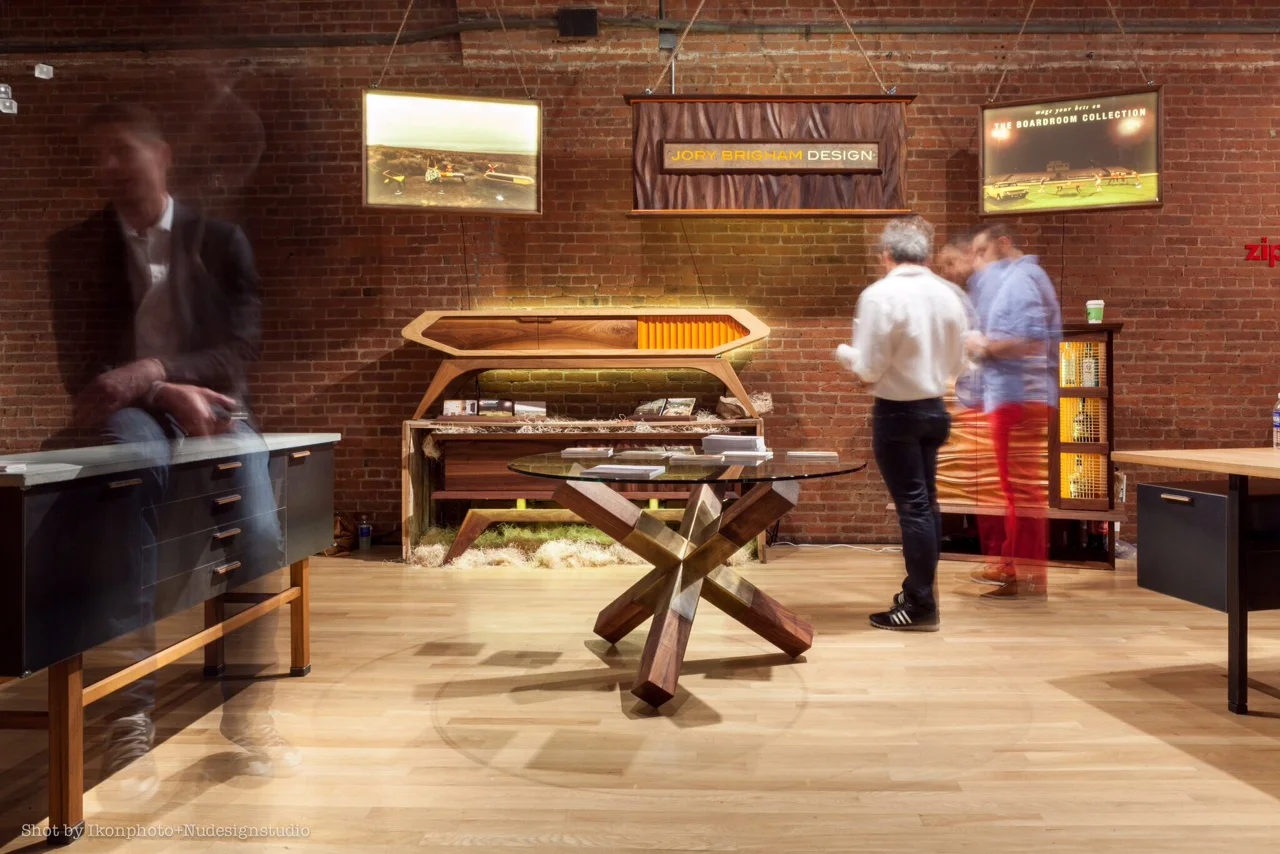
We were able to bring some of our pieces out to New York for Design Week a few weeks ago, and we really saw how we were stacked up with the rest of the people in the industry.  We participated in the WantedDesign show rather than ICFF.  I felt it was a good way to transition into the scene.  It was full of new ideas and energy.  We met a lot of great people, and we all walked away with a new perspective on the industry.  Our product line stands apart in many ways compared to most. I've never designed with the masses in mind, but designed for myself, and those who wanted something truly different.  I had been battling with whether or not to simplify my designs, cut out color, and sell to certain retailers that may not represent, or even get our vision.  I came back, accepting that this company will be different, and once again being excited about it.  Also, while out in New York, we signed a contract with DesignLush, an amazing showroom in Manhattan. I feel its important for people to be able to see, and touch our furniture, and now the east coast can.  We will be announcing more showrooms in the coming months so stay tuned!!  The past 3 weeks have been hectic in so many ways, but when I say hectic, it’s in great ways, there’s a lot of life, energy and new ideas around the shop these days.

Our WantedDesign Show Display

The Aftermath


Framework Episode: The Final

It dawned on us around here at the shop as well as some of the readers who follow this blog that I haven’t posted for quite some time. I can’t say it didn’t cross my mind, but the truth is that things have been hectic around here; I’ve been doing everything in my power to just keep the most basic of things maintained. I say all of this not in a negative way but more out of excitement. With all the recent interest in what we’re doing here, it has brought in some new help, and energy. I feel like we’re learning how to refine our process not only in fabrication but also regarding the business side of things. And the hope for the blog and website is to continue to put out creative visuals to go along with the furniture.

The last time this blog was updated was right after the 9th episode of Framework and although I really would prefer not to focus too much on the reality show, I figure I’ll wrap it up and get it to the parts where winning Framework opened up the doors for new things in my career. 

The Final Pieces

Its been about 8 months since we filmed the final episode of Framework, so it may be that I only remember certain details, but here goes...

The Challenge was to make an “iconic piece of Furniture. This was exciting to me because I feel like that was an attainable goal. To me, iconic means being original, which by now I had found was the demise of most of the other contestants…. well that along with poorly executed designs. But, I was only worried about Jason who had always been my only concern from the beginning, not only did he make quality pieces but he also thought outside the box more so than any of the others. 

To our surprise, they announced each contestant was to be paired with three “helpers”, who ended up being all the past contestants which had already been sent home.  None of us were happy about this, I was missing the days I could work with my guys at the shop again, or by myself for that matter.  I’ll try to steer away from the drama that created, but I’ll say this, it's frustrating to deal with certain people who don’t share the same work ethic and standards of quality that I do.

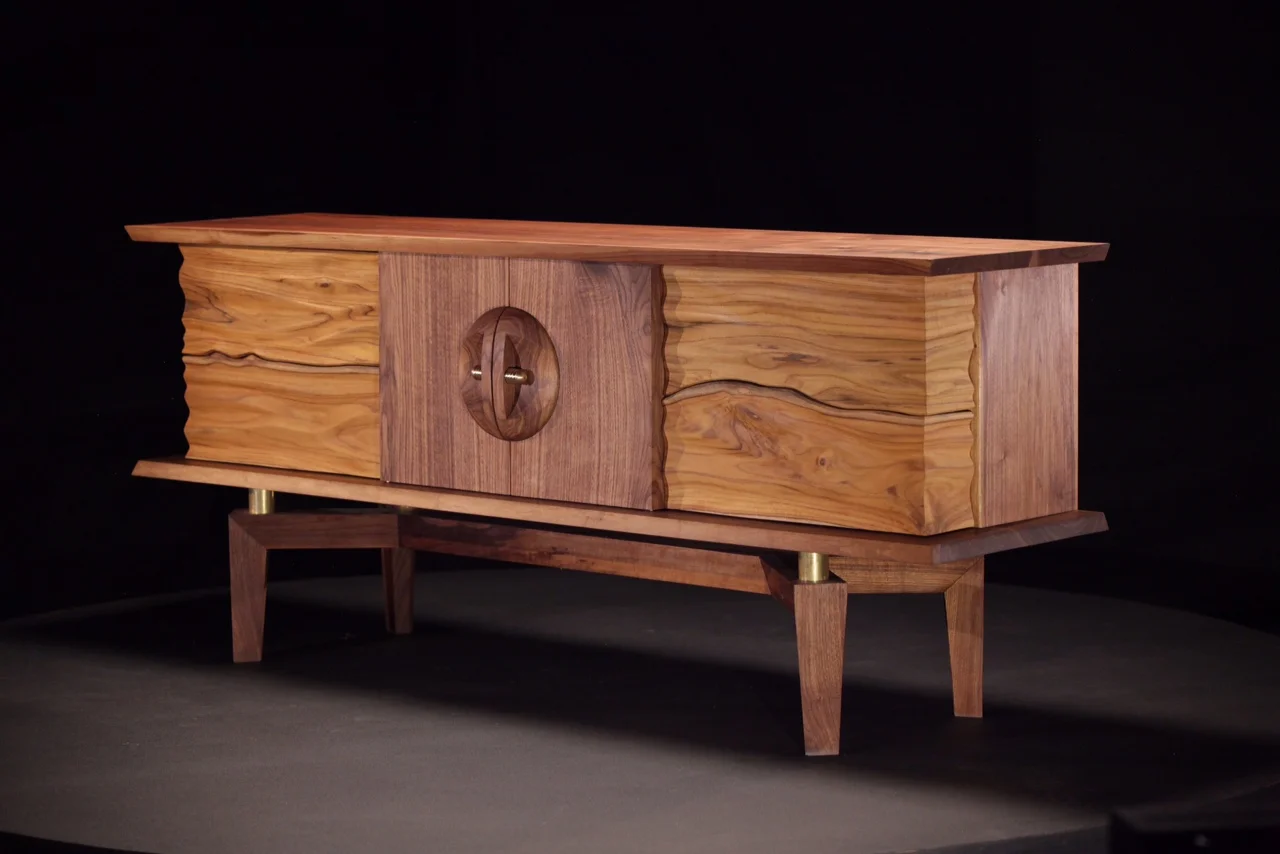
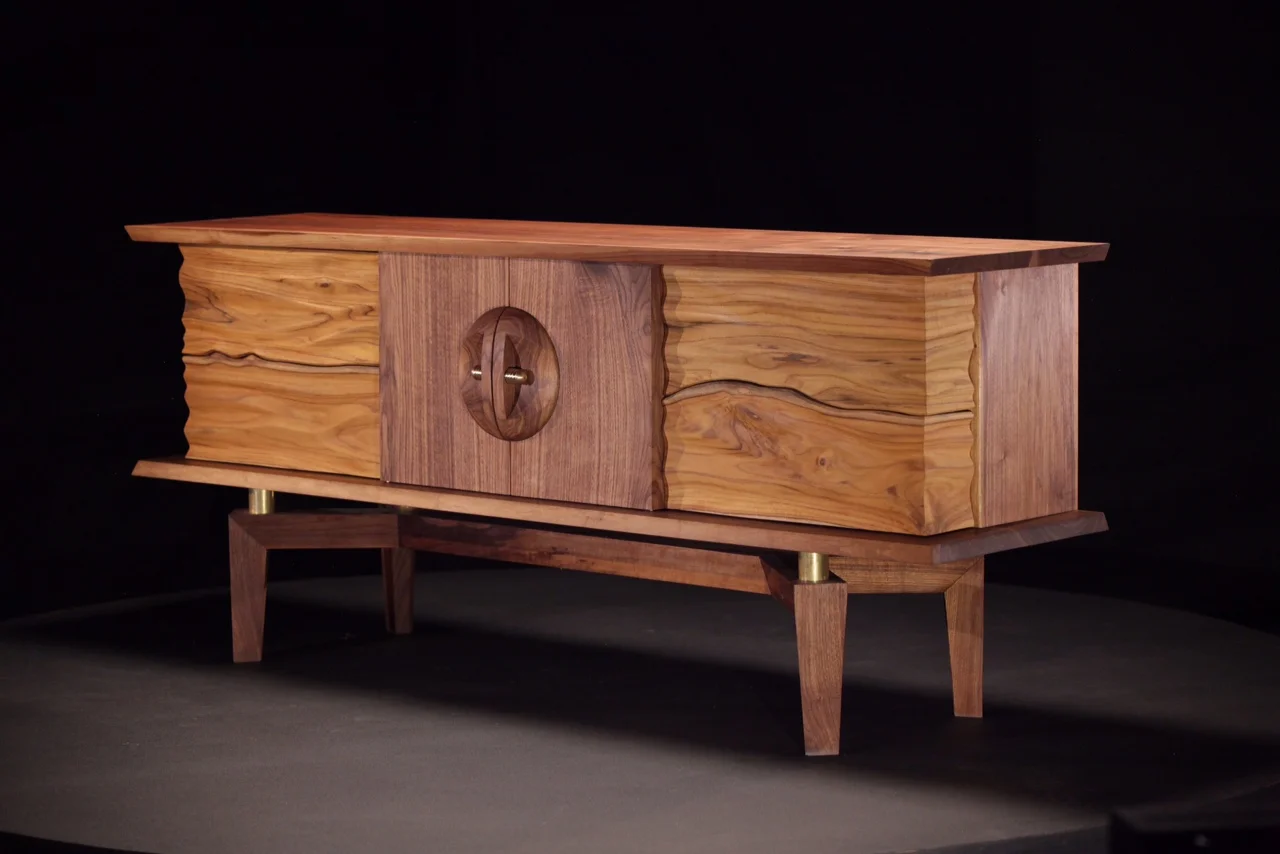
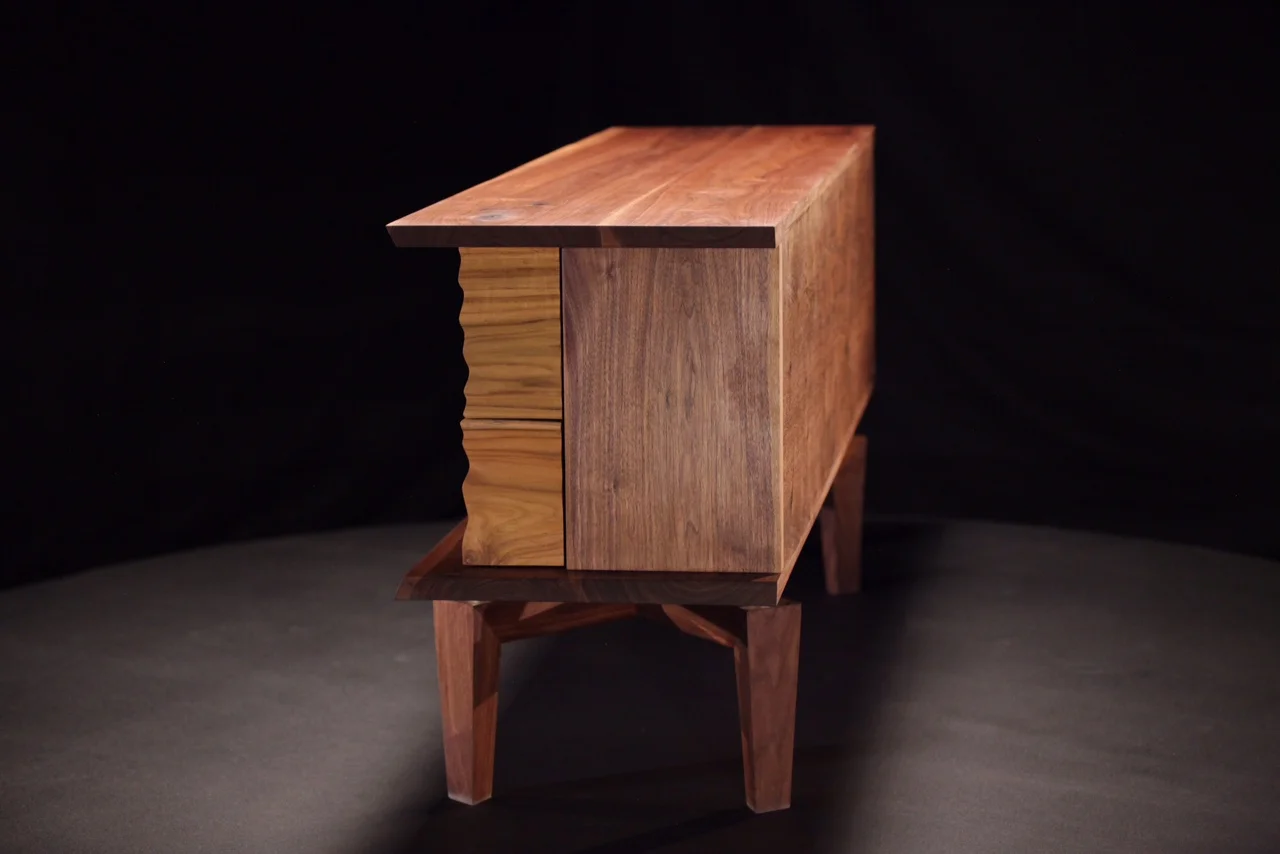
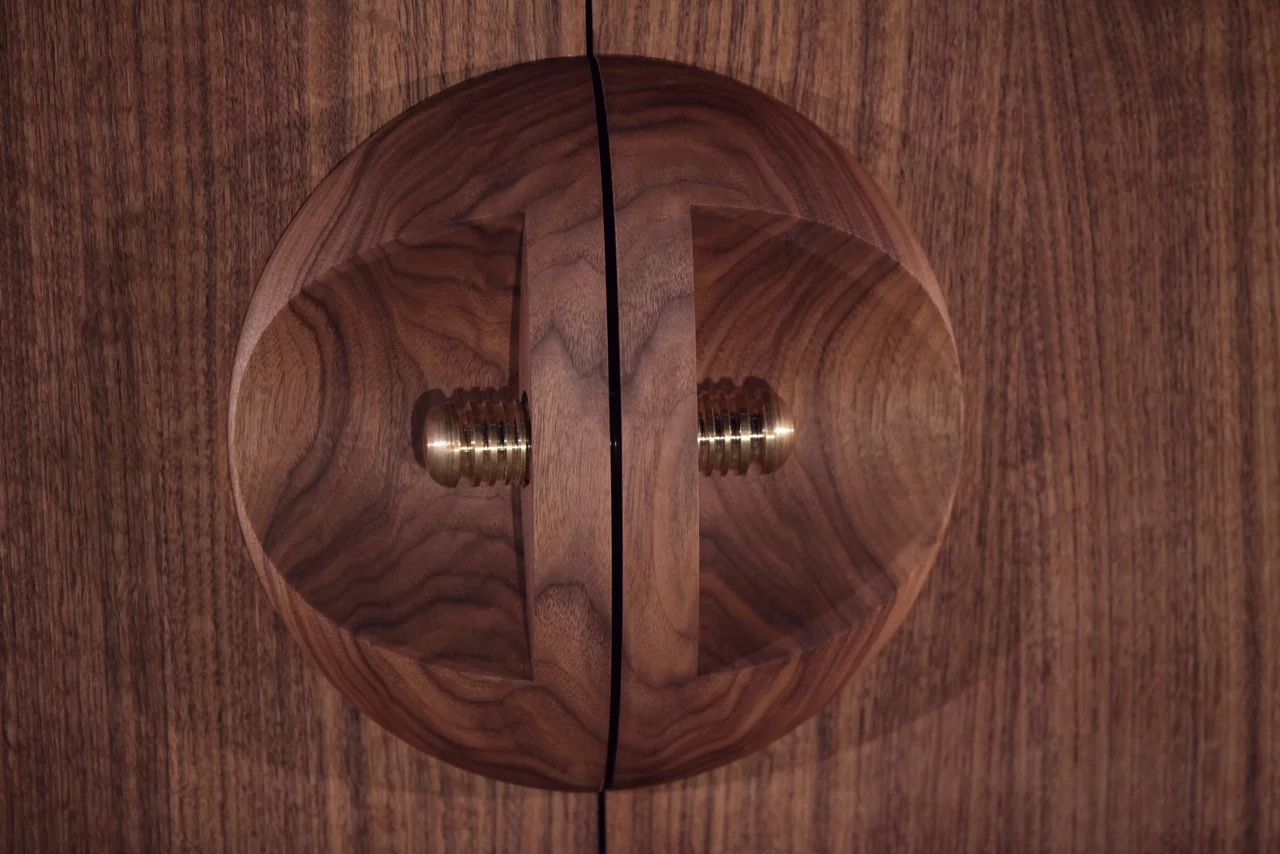
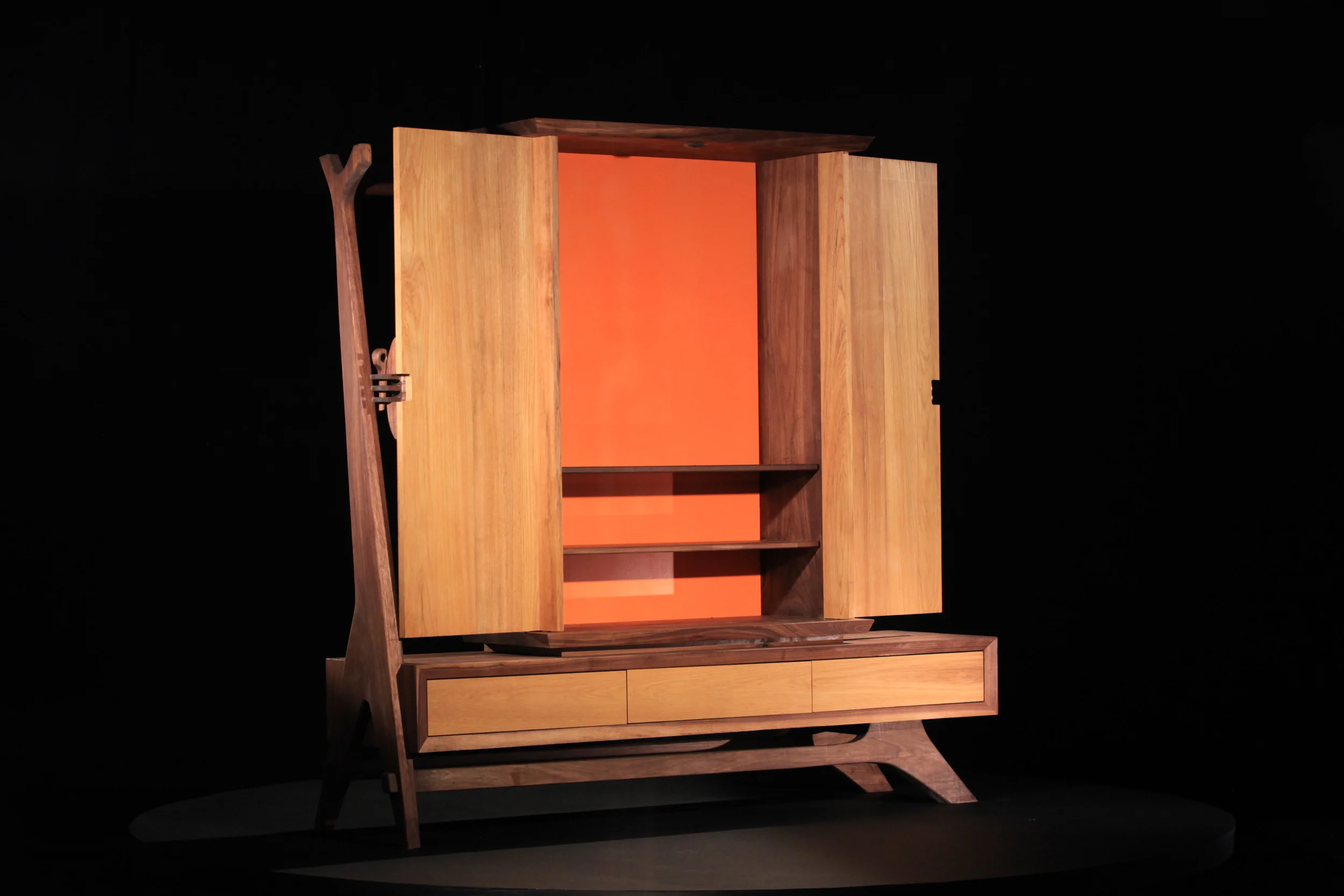
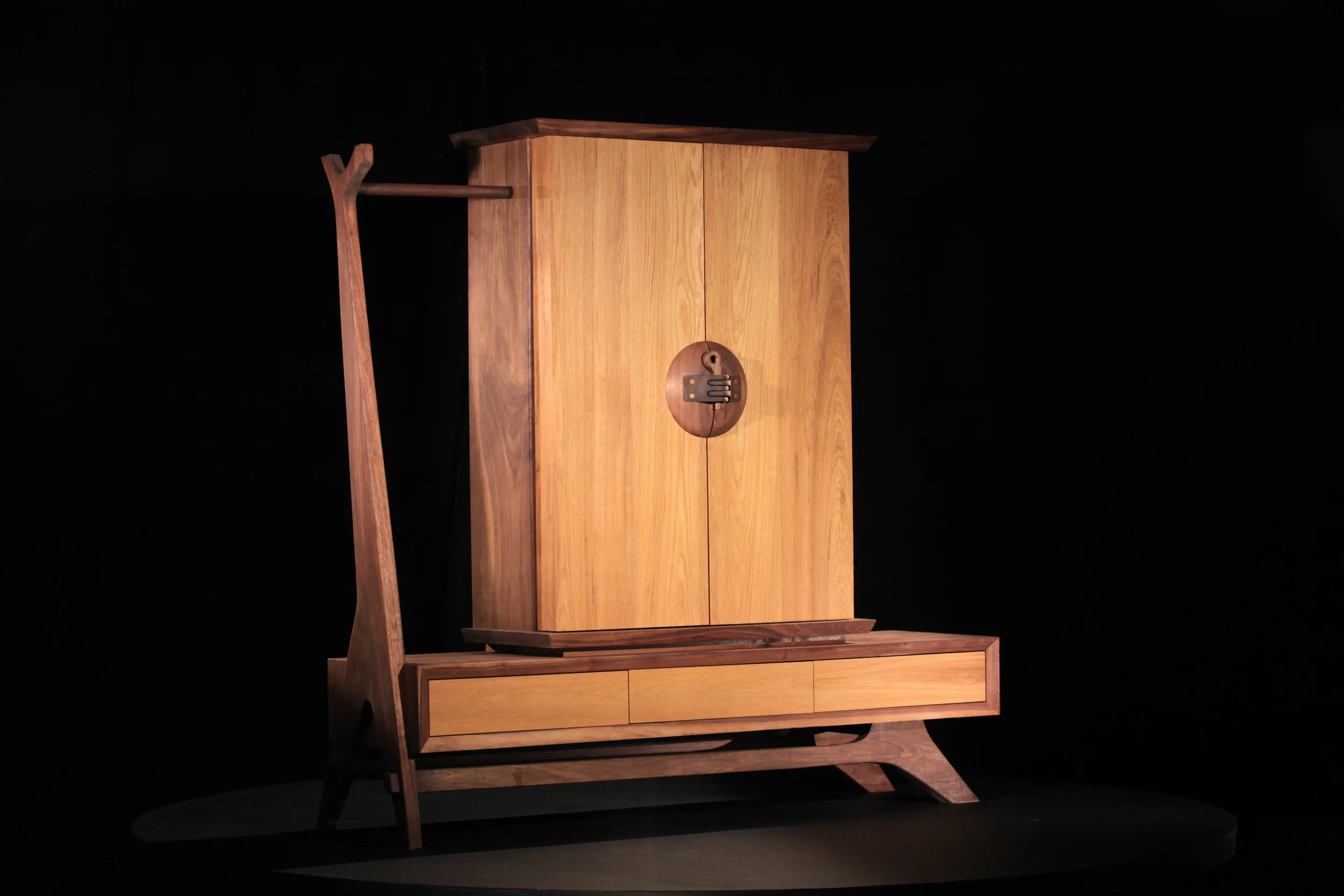
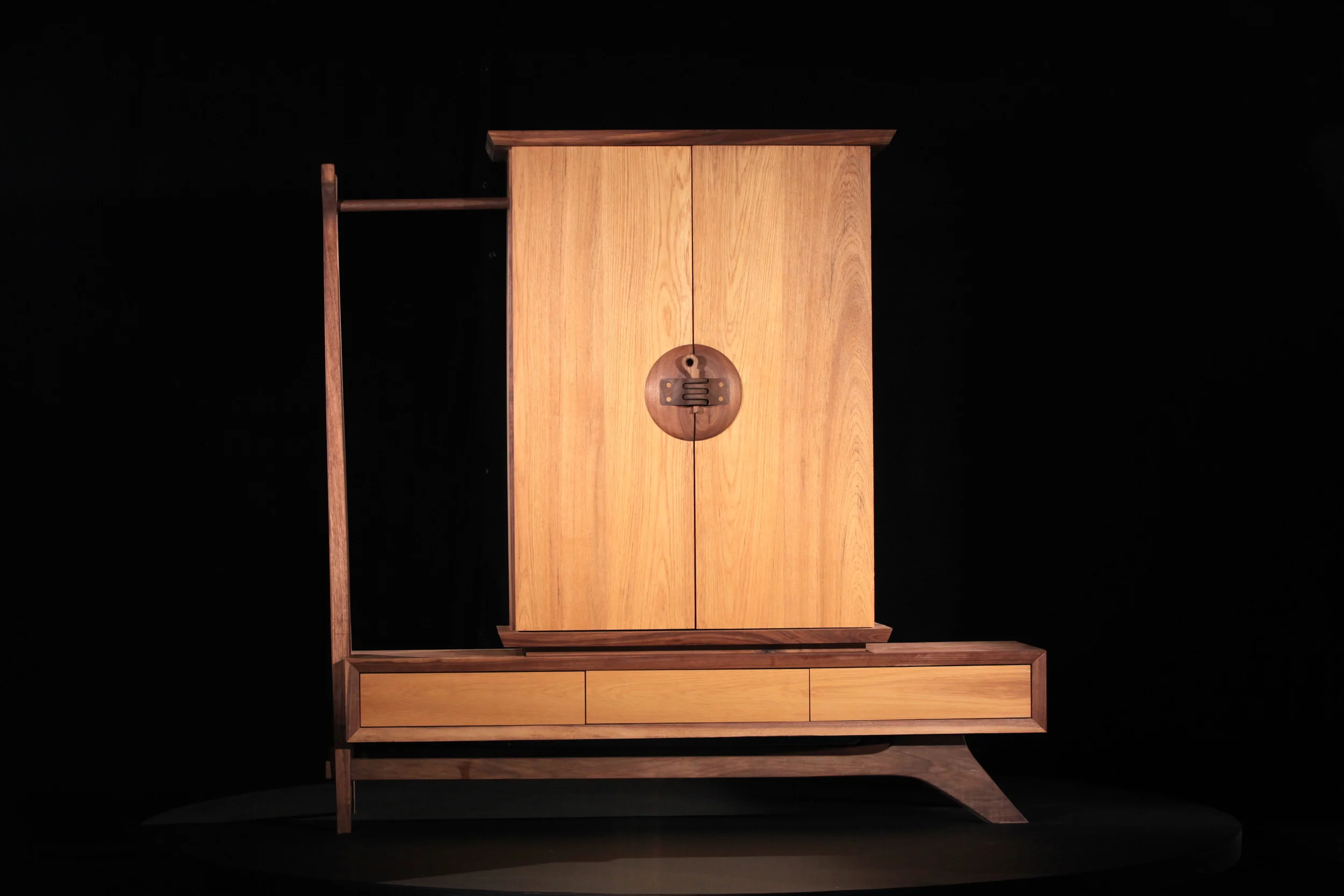
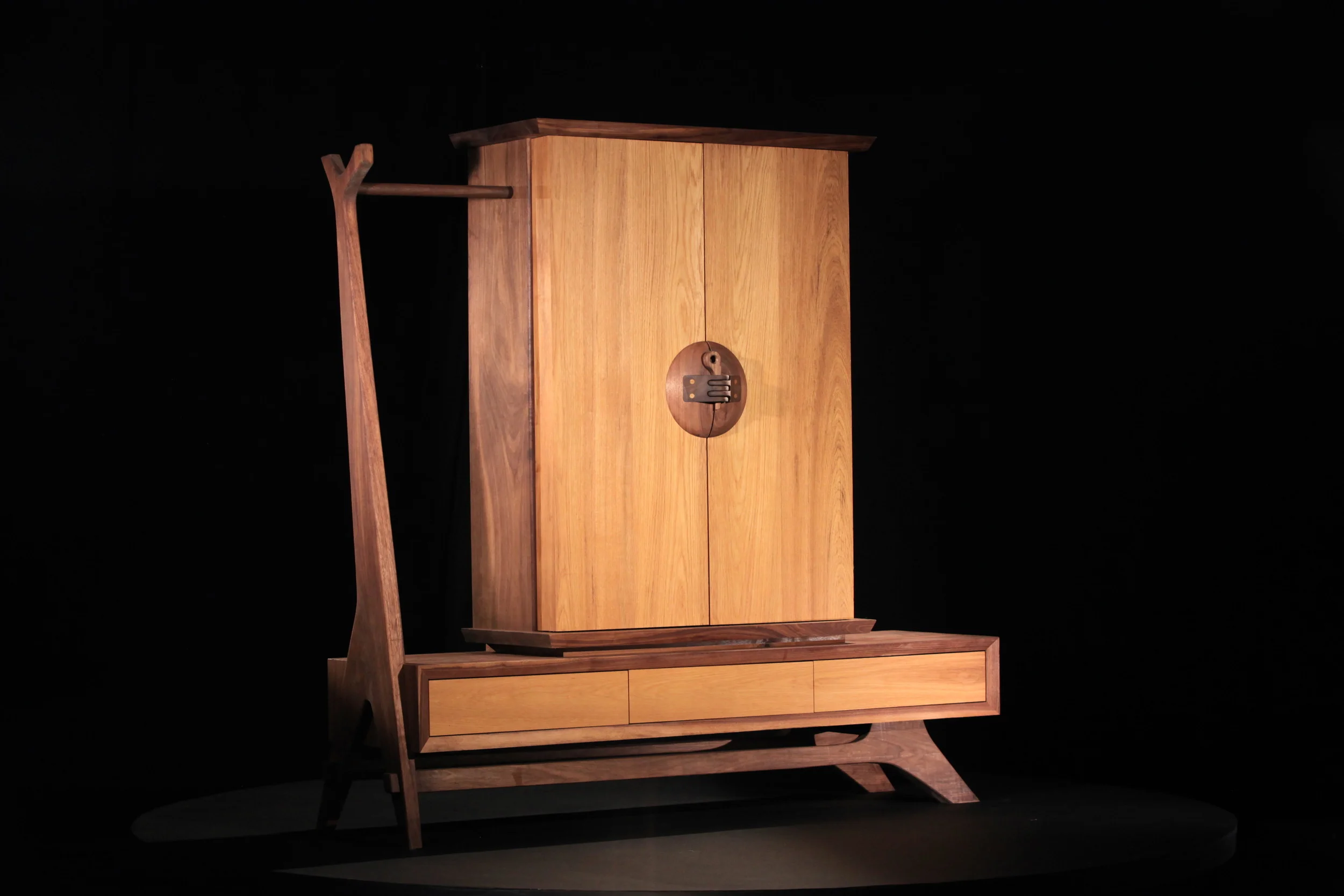
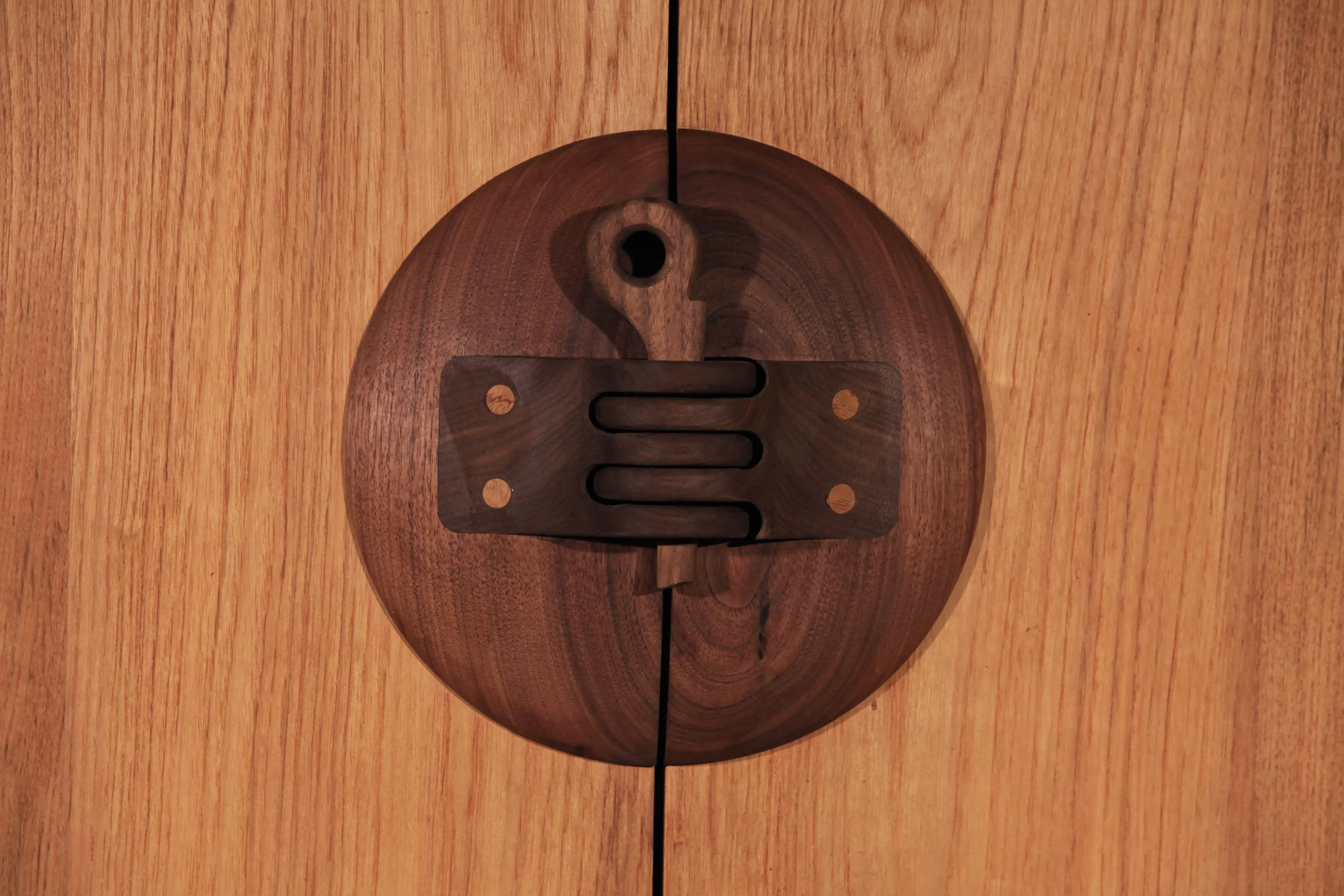
My team and I Built 3 pieces. A Credenza, coffee table and end table.  I played it safe making the credenza and side table, working with materials I am comfortable working with and the credenza allowed me to use elements which define my design such as hand carved teak drawers, and a latch that I came up with.  The end table was just a filler incase something failed.
 

The Coffee Table

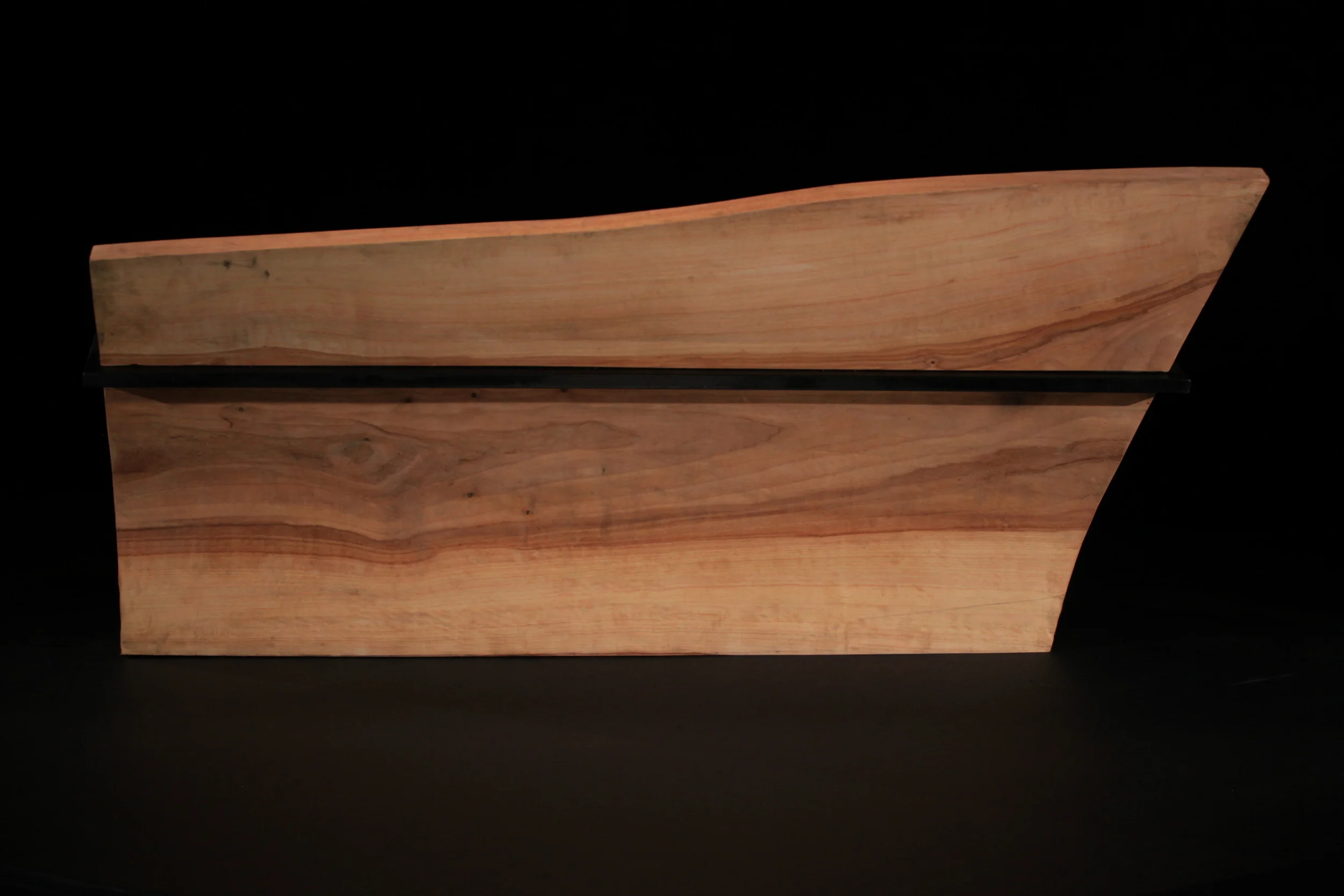
When it came to the coffee table, I really went all out and got weird, so much to the point where I almost didn’t even show it. Come to find out that was probably the piece I liked the most out of the 3 and have gotten a ton of emails and comments about the coffee table, so I think I’ll go through the process quickly. 

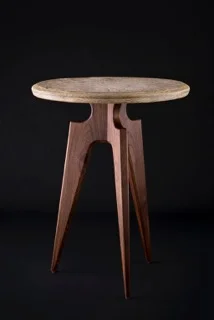
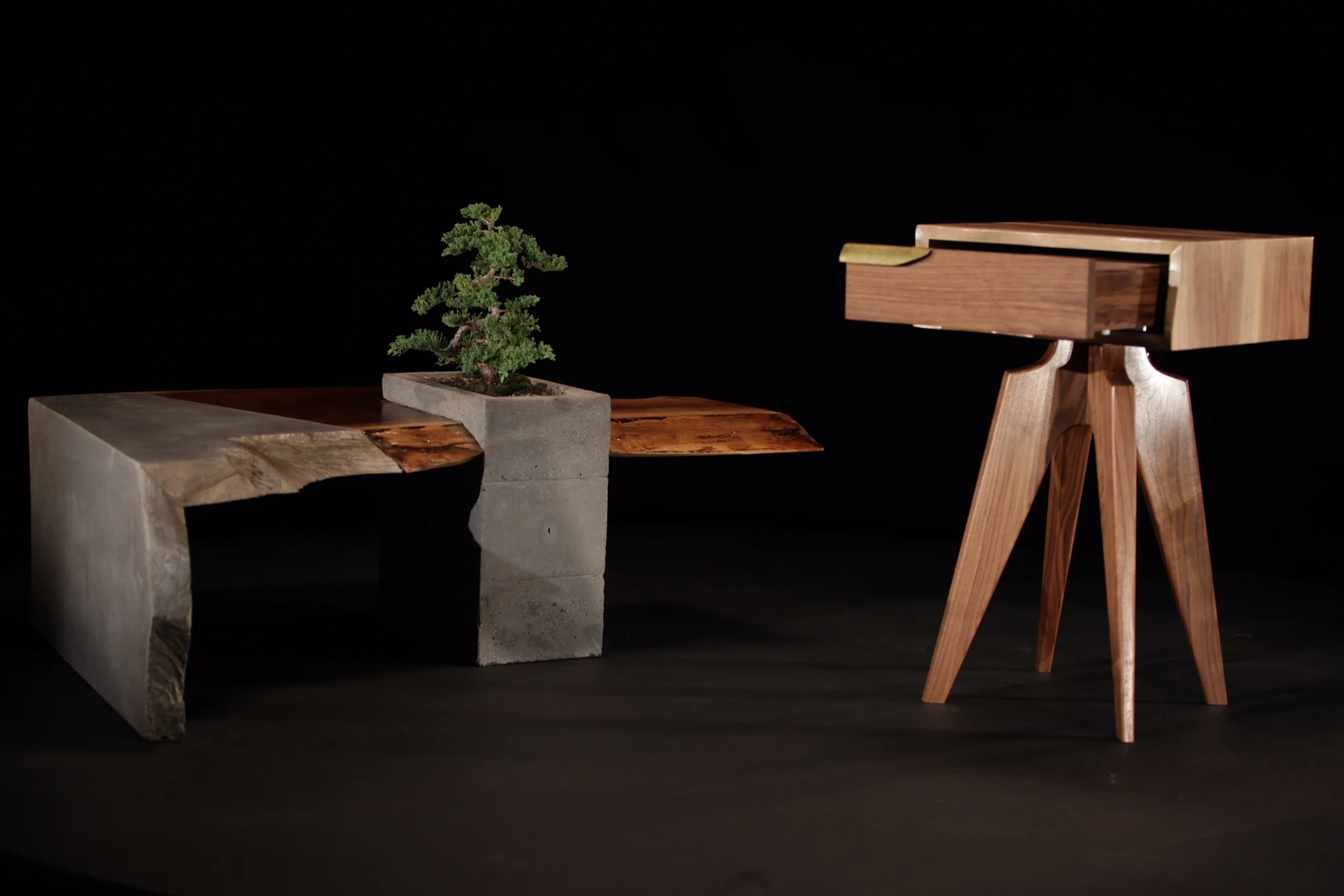
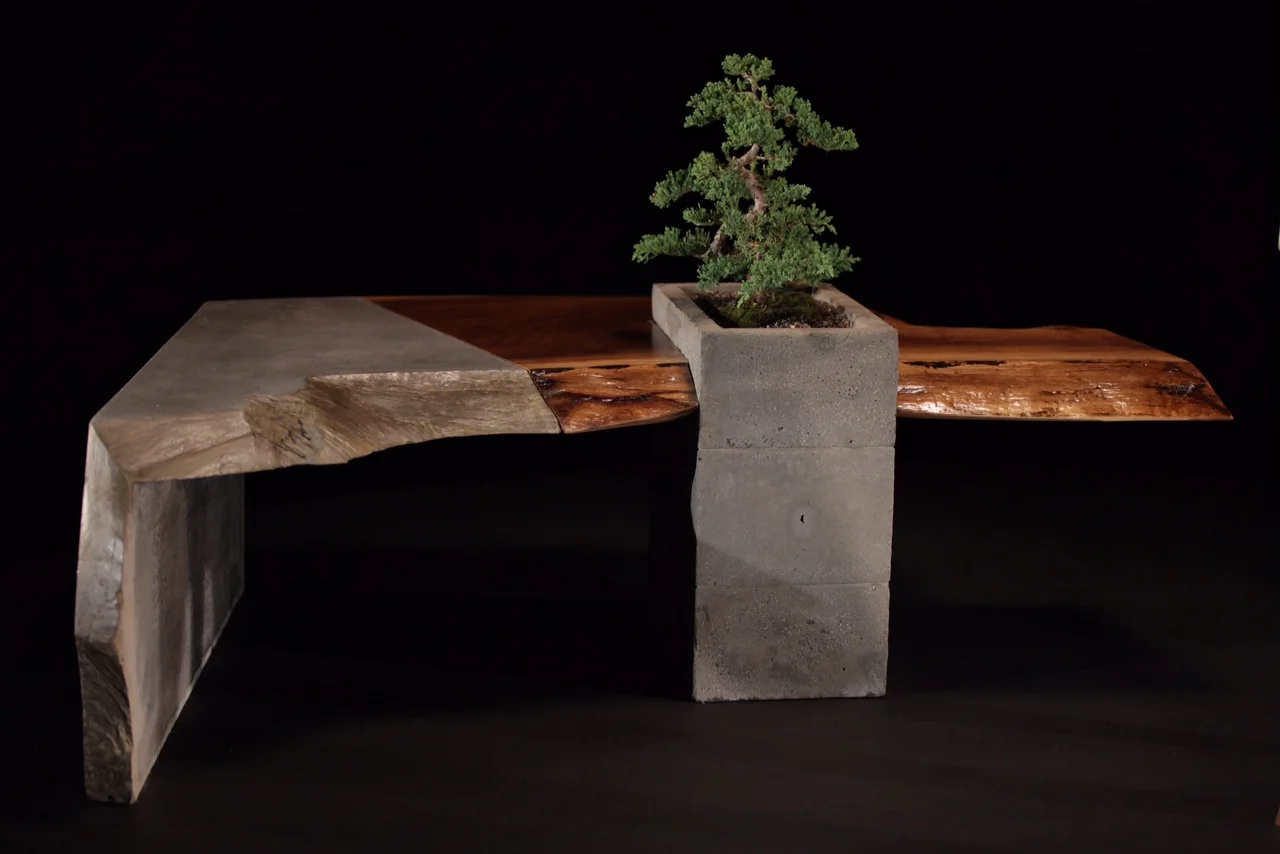
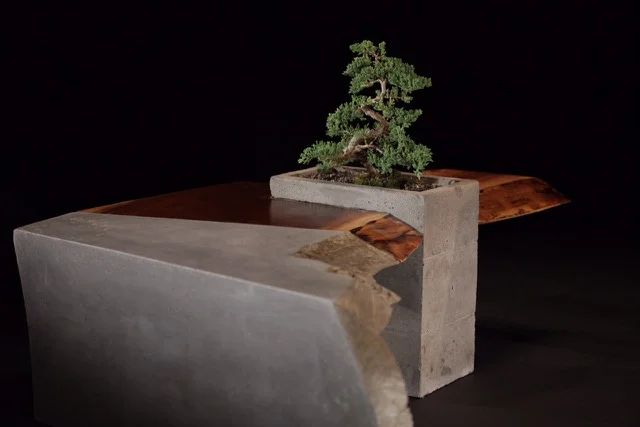
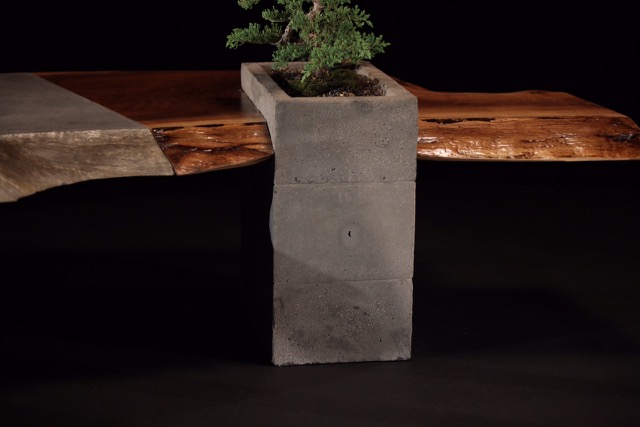
I wanted to find a way to marry the synthetic with the organic and in a way that I have never seen before. The tricky part was making that happen in the allotted 24 hours. The idea in my head was to cast a slab of walnut, live edge and all in concrete. In order for that to happen, you need to first make a mold of the slab in silicone, so that every detail of the live edge will show up. Silicon typically takes a full day to dry, and even longer to off-gass. In the past, I have poured the concrete into the fresh molds too soon and it would leave a chalky finish that can be rubbed off with your fingers. To avoid this I decided to design and build two different but similar designs, using two different Silicones. My hope was that one of them would work. I build the coffee table out of the wood first with a "waterfall” holding up one end,  and a planter for the other.
After using the Domino to join the mitered end where it made the 90 degree angle for the leg, or “waterfall” we cut it. We took both of the pieces of Walnut and cast them. The idea was to use both pieces of concrete and both pieces of walnut for the two tables. One would have a concrete “waterfall” and walnut top and the other would have a Walnut “waterfall” with a concrete top. I was hoping that both forms would off-gas and cure in time giving me two perfect pieces of concrete. Unfortunately this was not the case. I ended up with a nice concrete top and a failed, crusty and chalky “waterfall”.  I tossed the one table and focused on the other.

We polished the surface and stained the “live edge” darker, leaving the stain soaking into the texture to give it definition from the top just as you would see in wood. The concrete planter wasn’t perfect but it was usable. I had used the domino to mortise the joining parts before casting it so that I would have a way to join the wood to concrete by means of a domino and Epoxy. Most of the weight was being held up by the planter so there was very little stress on the joints. 

The Judges' Decision

To my surprise, Freddy ended up standing next to me after the judges's decided Jason didn’t deliver. Freddy had built a chair, mirror and a set of pendant lights, all of which he had built before. He won the judges over with the pendant lights, and then it was just Freddy and I.

Although if you watched the finale, it doesn’t take too long for the three judges to deliberate. But for me, it felt like a terribly long time! It was probably only 15 minutes and the decision came down: two to one in my favor.

I do have to say that I am so happy its over, the entire filming process took 9 1/2 weeks and I think my wife took the brunt of me being gone. Luckily, my two kids, that were 4 and 5 years old, still remembered me and seemed to have forgiven me for being gone.

I received my prize package a few months ago and have been having a blast shopping at my local Miners Ace Hardware. For winning, Ace gave me 80 gift cards worth $250 each and I have used them mostly to barter for recent photoshoots, catalog design, and payment for models. The local Ace hardware here in San luis obispo is incredible, they have everything including Beef Jerky! Needless to say, we are buying even our laundry detergent there. As for the rest of the prize, the $100,000 has given us the freedom to create two new collections and lots of photo shoots to fill our new 76 page catalog that turned out so good it qualifies as a coffee table book. 

Thanks for all your support and interest in the show and a bit into the background of my work. There is more that I would like to cover, but I know this post is long, so I will be posting soon on how we are growing as a company, the direction we are moving in, and a bit about the showroom in New York that is representing us.


Framework Episode 9: Recap


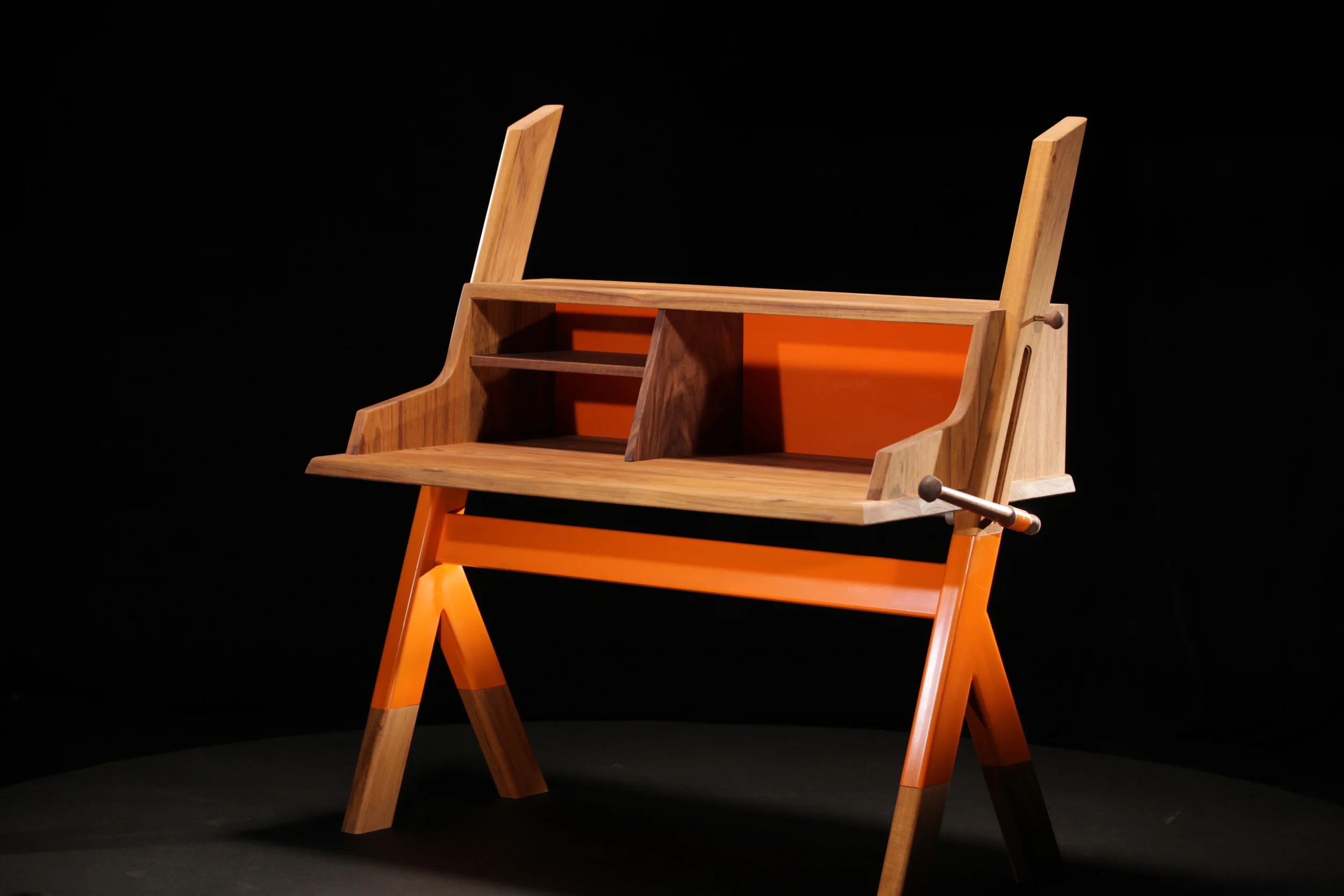
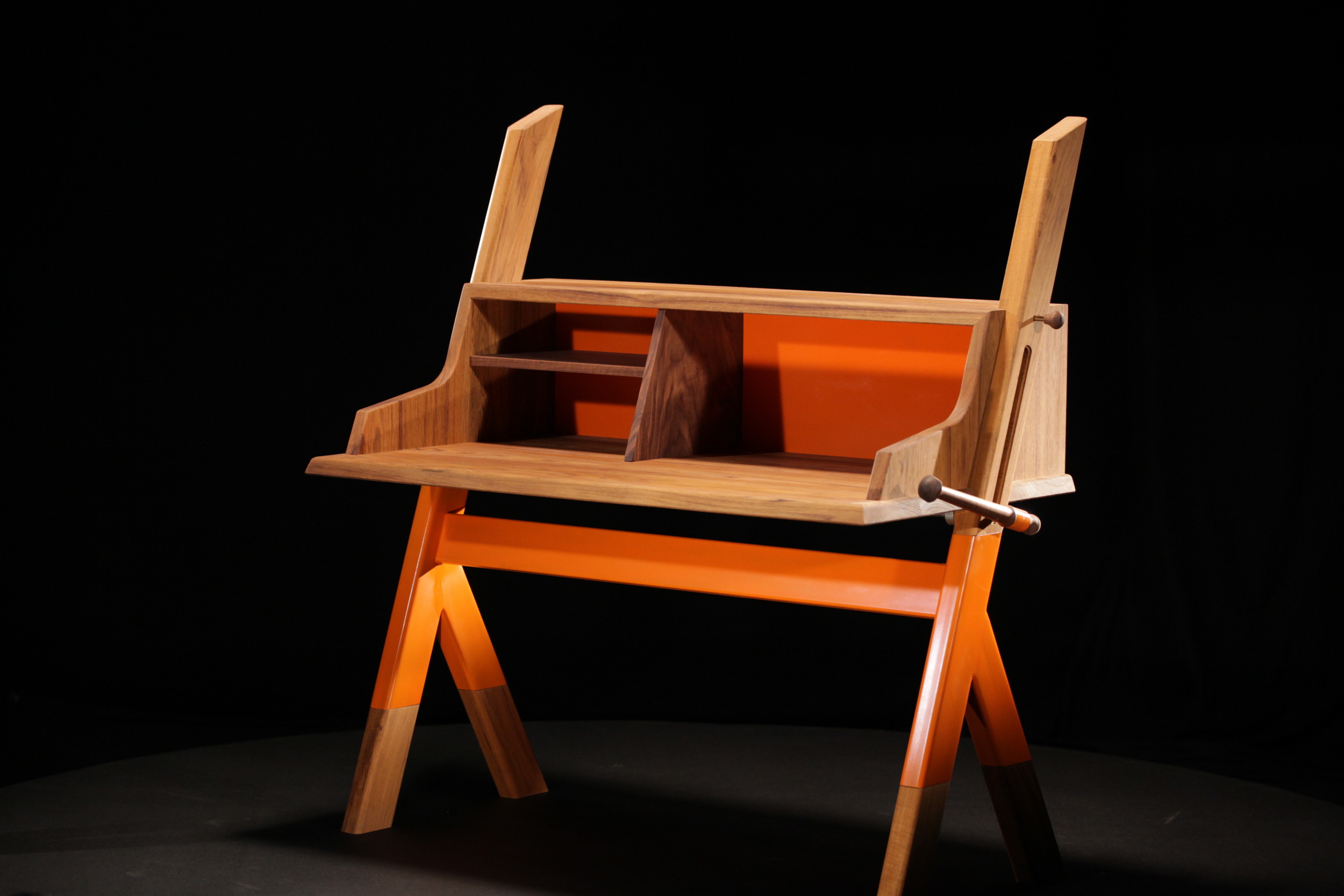
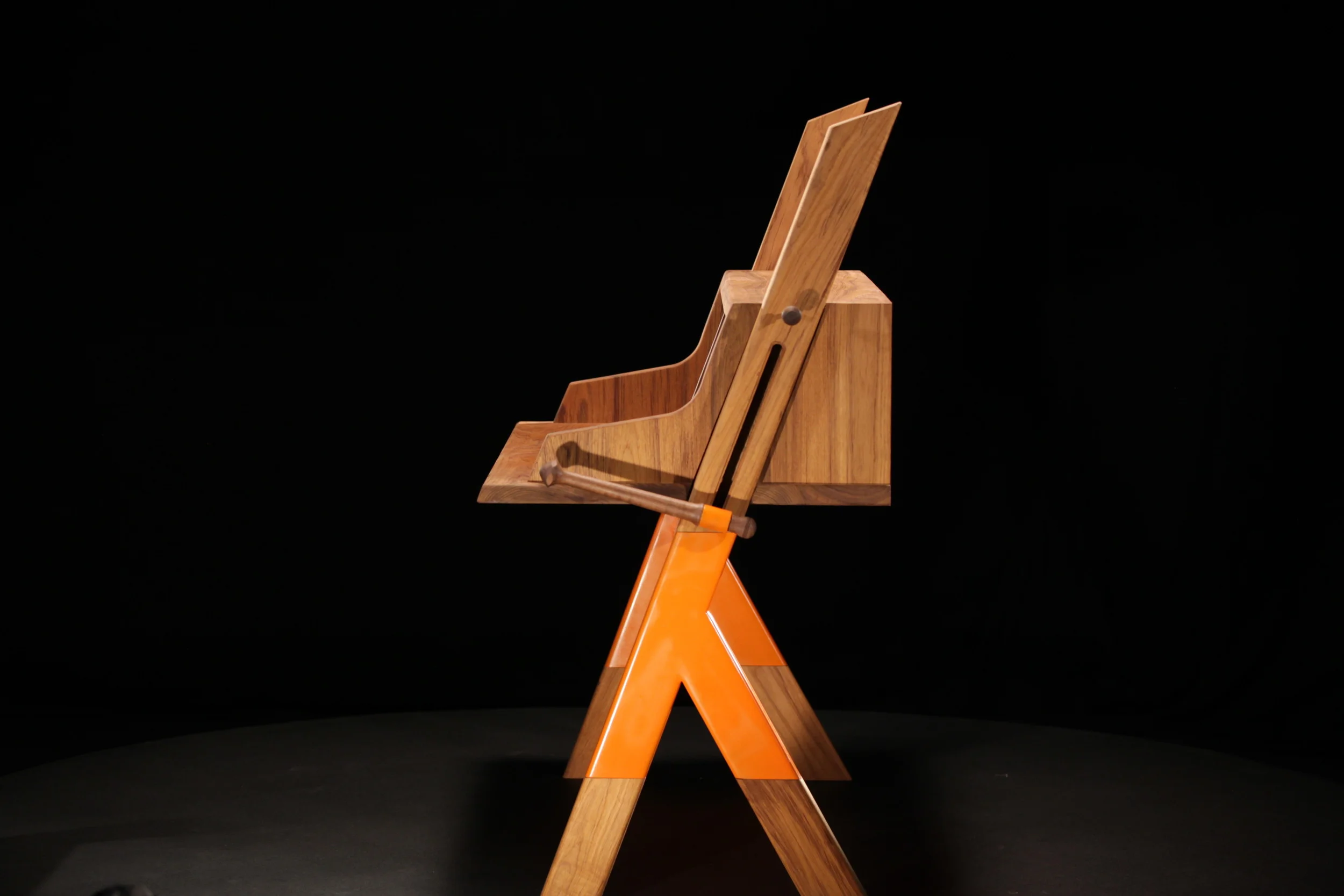
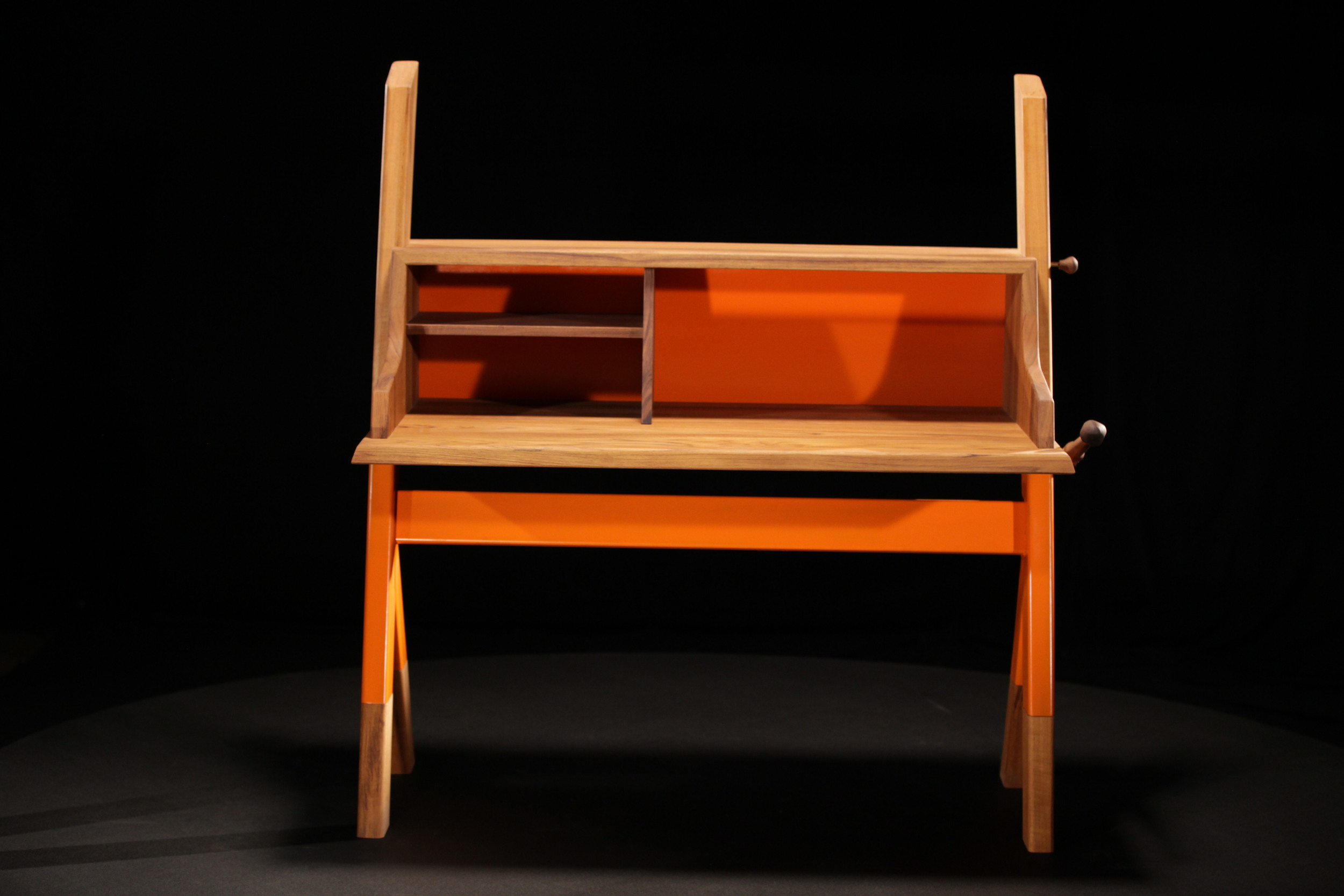
Build an adjustable desk?!?!? We were all thrown for a loop on this one. Even Jason, who was loving this challenge was scared for a bit. Although I love figuring these types of mechanics out, it still came down to time, as well as material availability. There was so much room for failing, not only for the mechanism but with the time restraint. 

I had a basic idea in my head I had gotten from the vice on my work bench, but needed to translate that into something that didn’t rack, looked good, and would be easy enough to adjust. 

Thankfully, it didn’t take me long to come up with an overall deign for the actual desk part. But like I mentioned, coming up with the mechanism in time to order the parts and have them arrive was stressful.  Like most challenges, you had to wing it because we were all working outside our element. I looked through every gear and pinion offered, along with ways to keep this thing steady. Come to find out, theres a lot out there, and the hard part is putting together all the parts needed without having them in your hand. We really had to imagine how one gear would work with the other in our head, order them and hope for the best.

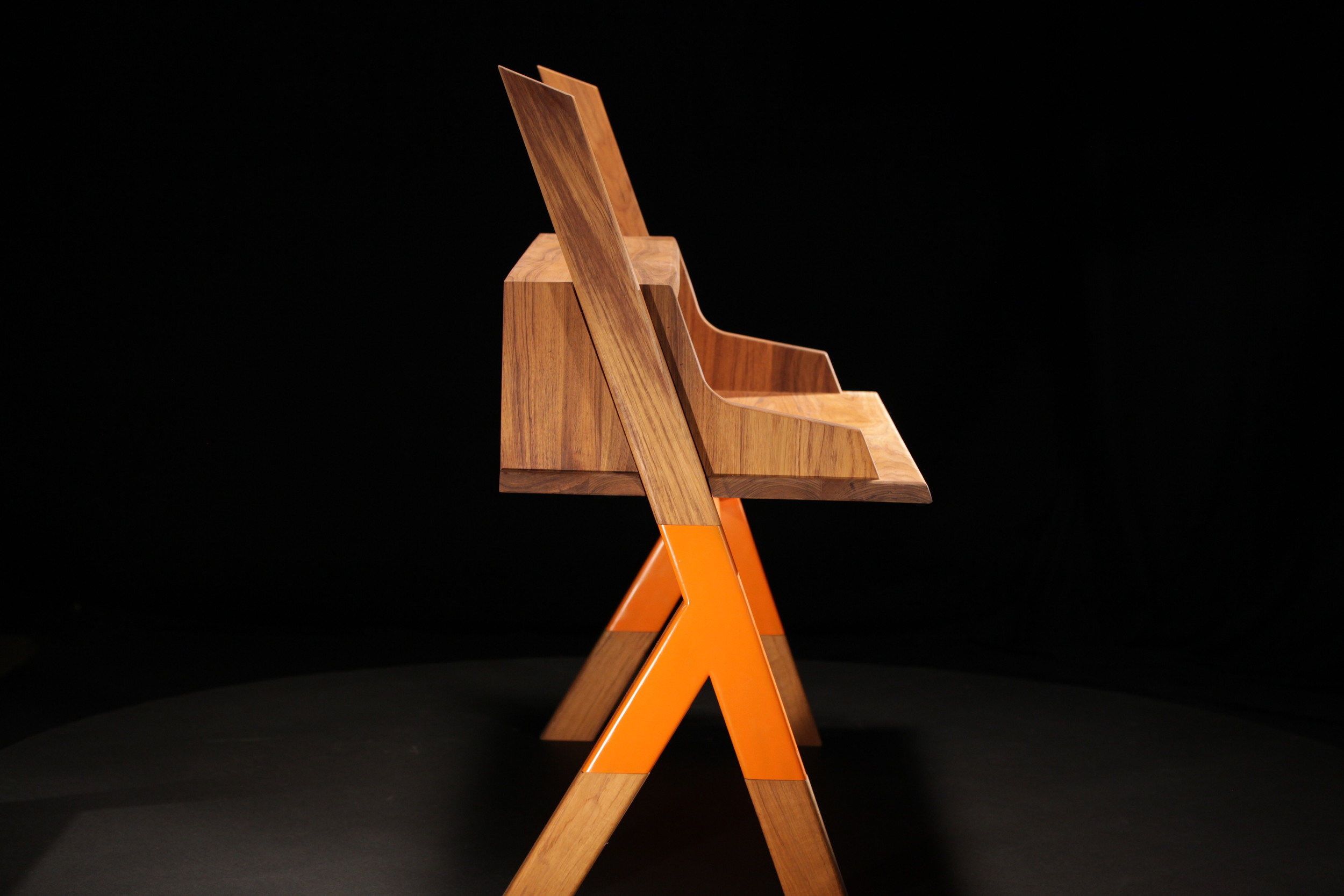
I had a lot of teak left over from the last build, so I started with the top of the desk while I waited for the gears and 2x4 steel tubing to arrive. My idea was to use the tubing as part of the legs to provide structural stability. This came in handy because I finally figured out that welding is so much quicker than joining wood, not to mention the judges loved when we went outside our wheelhouse. 

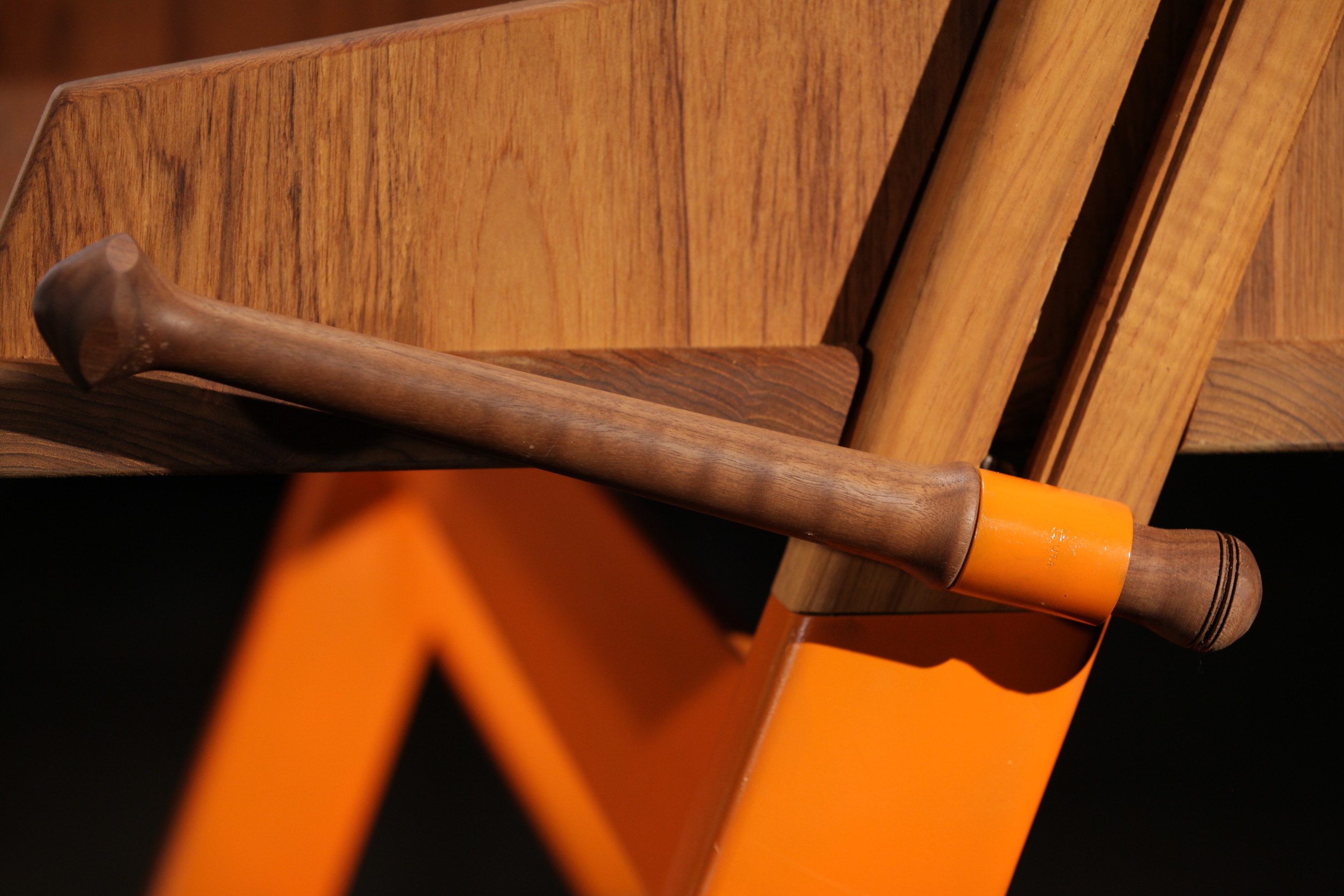
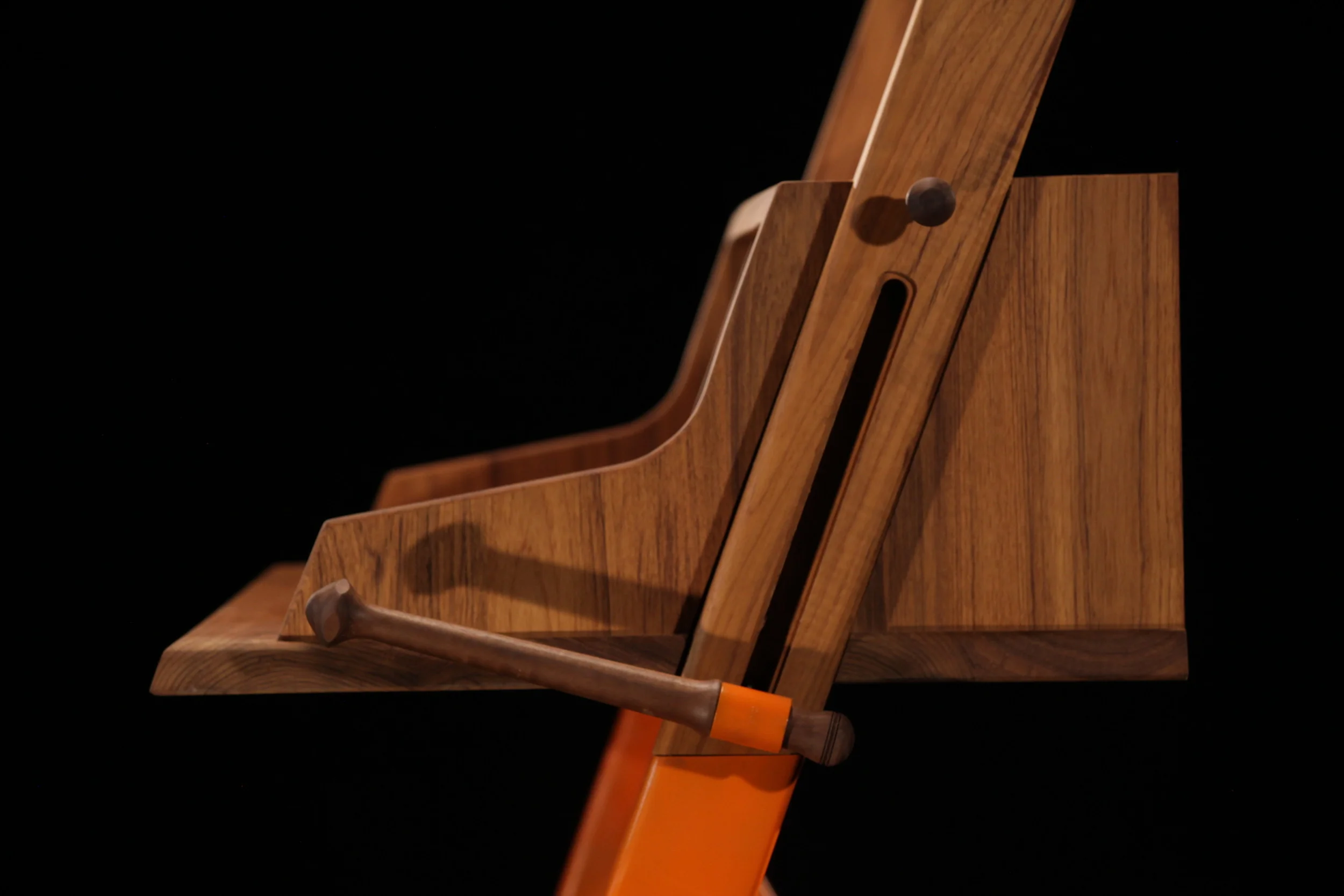
I ended up ordering plenty of hardware, knowing that I would probably want to mix and match, and I’m so glad I did. By the time all the gears, rods, racks and pinions arrived my ideas had to be tweaked a bit. I used a drive shaft that went from one side of the desk to the other. I mortised a groove on the left leg so that the rack would set into it. On the right leg I had the groove go all the way through and connect to a handle. I attached a gear on either end of the drive shaft. These gears ran up and down the rack. The fact that I had the drive shaft controlling both the gears at the same time kept the desk going up and down smoothly, and evenly. The problem I encountered was that if you let go of the handle, the desk would come slamming down. I mortised in the side of the desk top with the legs that ran up, hoping that it would jam it up just enough to keep it from falling down, but no such luck. I tried to order a pawl, and ratchet, but I didn’t have the time. 

I made a walnut bar/handle on the lathe instead of the wheel I had ordered. I thought the wheel looked a little generic, so I gave it to Lacey who was in desperate need of a miracle.


Framework Episode 8: Recap

Chainsaw Furniture


This week's recap of episode 8 of Framework is one I wouldn’t mind skipping, but….. here it is.  


I started out dreading this challenge, I couldn’t get the thought of the chachki chainsaw furniture you tend to see at craft fairs in Reno out of my mind, you know, the type of thing you see sitting next to a repurposed wine barrel that's now a chair. I thought from the beginning that the last thing they should call this challenge was “precision”. To me, there's nothing precise about a chainsaw, and there's no security in the fact that we were relying on somebody else to do the cutting. But nonetheless this is what we had to deal with, so I’ll break it down.

 I had a vague design in my head, one that included the stub of a huge branch that projected out from the Ash trunk I was working with. Here, I will skip the paragraph I wanted to write  explaining how Big John (my chainsaw artist) and I had a severe miscommunication on which part of the line to cut on, and ultimately how I had to scrap my first concept ( I mean, when cutting with a chainsaw, it's not a strict line, many times, they have to cut out wedged chucks, like when cutting down a tree, thus, cutting on the wrong side of my line was a 6" plus mistake). For some reason, I have a knack for trying to stick to my original idea even when the material tells me not to. I did this on the first challenge, trying to make a square peg fit into a round hole, and didn’t learn my lesson. In retrospect. I should’ve gone back to the drawing board, and made something completely different, even now, I can think of a dozen things I should’ve done, but at the time my mind was thinking of only this chaise, that had now evolved into a bench because of the missing stub.

I spent the next 8 or so hours directing Big John on which cuts to make. 6 hours after that, I spent planing, grinding, and sanding it. On flat surfaces, I used the planer, while on the radius I used the  Kutzall. For those of you who have never used a Kutzall (www.olivercorp.com) it was my secret weapon, by the end of the show almost everybody had either borrowed mine, or ordered their own.  It's basically a grinding wheel with randomly placed carbide teeth, I used it for all my carving, and it worked great with the wet Ash log because it rarely gets clogged, and if it does you can burn the wood out of the teeth with a torch and get back to it. 

Once I had the shape as precise as possible, I drug it out of the yard into the shop area, mortised a horizontal groove into the back for a piece of 1” x 2” steel tubing I had ordered the day before. My Idea was to wrap a steel frame around the piece using it as a base when it met with the floor, but also giving it a sense that the tree had grown around it. I’ve always been fascinated with how trees will grow around barbed wire, or metal posts and this was my effort to get away from that chachki stuff I couldn’t get out of my head.

Metal working is not my strong suit, but I enjoy it. I tend to treat metal tools a bit different than the average worker, for example, I made a jig and set it up in the horizontal metal bandsaw that I used to make a compound angle. I was quite proud of it, but I think Jason had a hard time wrapping his head around it. My real problem came when some of the 1/8” tubing I ordered was mislabeled and was actually 1/16” and was faced with having to weld 1/8” with 1/16”. Anybody who welds knows thats a "blowout" nightmare; I struggled through that, and after that is when I knew I losing the race against the clock. 

More complications arose because the process was: I had to weld the base after I mortised it into the wood, so painting it had to be done before I fit it, but the welding had to be done after all that. I painted it where I could, and left the steel raw where I had to weld it, knowing I would have to come back and paint where I had welded. The tricky part was was giving myself enough time to let the paint dry and still have time to oil the wood around the metal. Looking back, I should have blackened the steel, but I wasn't sure I had the time.

It all went to hell about the time I had to oil the wood even though the paint on the mortised in metal wasn't even dry yet. And, I just realized I jumped the gun on the “it all went to hell” part, that was later. I spent a while trying to do a better job on being careful when I was oiling it, and touching up the parts where the oil had etched the paint away.

Okay, heres the part you’ve been waiting for:  I had been working outside, and there wasn’t a flat part of the floor and the place I had chosen to fabricate my piece was no exception. when I sat in it I noticed a wobble, without thinking I took the track saw and cut a half inch off the bottom of the back base/leg. Turns out that half inch as the tipping point of where you could push it backwards if you really tried to, and the judges really did. Theproblem was that I never sat in it again after I cut it, so it was a shock when the judges pointed it out.

This challenge was humbling, not only because I choked so hard, but , Thom Jones was the guest judge. Thom is the owner of Semigoods (www.semigoods.com) although we had never met in person before, were acquaintances being in the same industry and is someone I have a lot of respect for.

Framework Episode 7: Recap

A Piece for Common

I probably should've sat down and written this post directly after watching the episode, but as usual, I put it off about a week. I suppose the good part is, a lot of the emotion has faded and I’m more prone to leaving out the drama. This one was tough, but now that I think about it, they all are, just in their own ways.

I  just finished watching episode 8 (they send me the episodes a couple days before they air), and it is humbling to say the least. Right when I think I have so much to say about my teammate BK, and how he made things so hard for me on this build, I need to remind myself that I, on my own, am pretty good at screwing things up in colossal ways. I guess its all part of woodworking, or anything we do that we really care about. We are not machines. We let our emotions run. And sometimes our inadequacies take the lead. The build of this wardrobe, along with the next episode are great examples of this.  

The first day of the build, I had a complete design block. I was up all night trying to come up with an idea, and about an hour before I had to be up, it hit me. Like always, I knew it was going to be a close one with timing, so I scheduled everything down to the T. There was very little room for screw-ups, so it was stressful from the start, not to mention we had lost about 4 hours on the first day of the build, and going on very little sleep; we started the 2nd day. 

For the legs, I used my typical technique of making a template out of MDF. I had ordered some wide 8/4 Walnut for these parts of the piece, so I had very little joining to do. I rough cut the leg parts, and used my templates to clean up the edges and make them as perfect as possible. While I was doing this, BK was making the long,(about 7’ long) box that was to sit as the base, and have three drawers for shoes.

Once I was done with the legs, I started on the large box that sat on top of the shoe compartment; I wanted this to sit tight and clean, so I mortised in the two sides made of 6/4 walnut into both the top and bottom. For the doors, I wanted them to wrap around the sides about 6”, this is one area I probably should have simplified if I would have know the problems that lay ahead, but as usual I couldn’t help myself.  The doors are made of 4/4 Teak and, I think, the only decent way to hinge a door like this is by using a ball bearing on both the top and bottom. I hate seeing any hardware, so this is a technique I use often. 

To make the hinges, I drill a hole in the bottom of the box, right below where the return part of the door sits. I thread the hole using a tap, and screw an allen bolt with a dimple on the top, a ball bearing sits perfectly in it. Then, I use a Festool centrotec countersink bit to drill a dimple on the bottom of the door to catch the bearing coming up from the bottom. I carry that line to the top of the door and make a dimple for a bearing to sit between the door and the top of the box. If all measurements are right, and all bearings line up, the hinge works perfectly, and its the cleanest one you'll never see. 

Once I got the hinge done, I moved onto the Latch. I’ve done this latch before so I flew through it. This is a bit more detailed and a little more difficult to explain, but between a table saw, bandsaw, drill press, lathe, and oscillating sander, I pulled it off. 

We had ordered a mirror to fit on the inside of the door, cut to size all ready to go and….. well for some reason, that never made it, I won’t mention any names. If you watched the episode you know that the dowel that was suppose to go on the inside never made it as well. Things happen, and that's exactly what happened a lot on this piece. We threw the shelves in the top part, and the drawers in the shoe compartment.  We barely had enough time to attach the top to the bottom part and it showed.

The image of the broken screw will forever be lodged in my memory. I wish I could go back and have a day to show this piece a little more love than it got, but I don’t think that’ll ever happen even though I asked if I could. 


Framework Episode 6: Recap

Outdoor Furniture


If you didn't see it, here is the full episode:


The Recap:

Last week, episode 6 of Framework aired, and as promised, I'm going to do a run-through of the things that never made it past the drama-loving editors. Although, I normally try to avoid anything other than the building process on these recaps, I do have to say, by this time, I am getting fed up with a few of the contestants and am having a more difficult time keeping that to myself during the challenges. I mean, after living, eating, driving, and working with some of these people, for 5 weeks thus far, AND not seeing your family, my patience was running thin.

The challenge this time was to create a lasting piece of outdoor furniture. After pitching my initial idea of a bench, and hearing the judges thoughts, I decided to create a concrete fire feature that burns ethanol gas.

If you watch the show, you would never know that this following part occurred. I began building the fire feature; the idea was to first create a MDF model, cast it in silicone, then fill this silicone mold with concrete. I knew finishing it would be a close one and I also knew that I had to have the silicone cast by the end of build day 1, that way I would have 18 hours left to pour the concrete and make the steel container that would house the ethanol.

The tricky part was that I needed a whole night and half of the second day to allow the silicone to dry and off-gas; it was imperative that the silicone was done on the first day or this piece would not work. I began, creating the shape of the fire feature out of MDF, made half of the form to house the silicone and then time on the first day was up. I knew at that point I needed to switch gears and build something else. It killed me to scrap the entire project, it would have been great, but this was just another instance of time not being on my side. And it was even more of a bummer when the judges came around the next morning and saw the MDF prototype and commented on how the fire feature would have been the winner...Oh well.

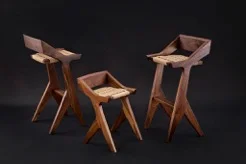
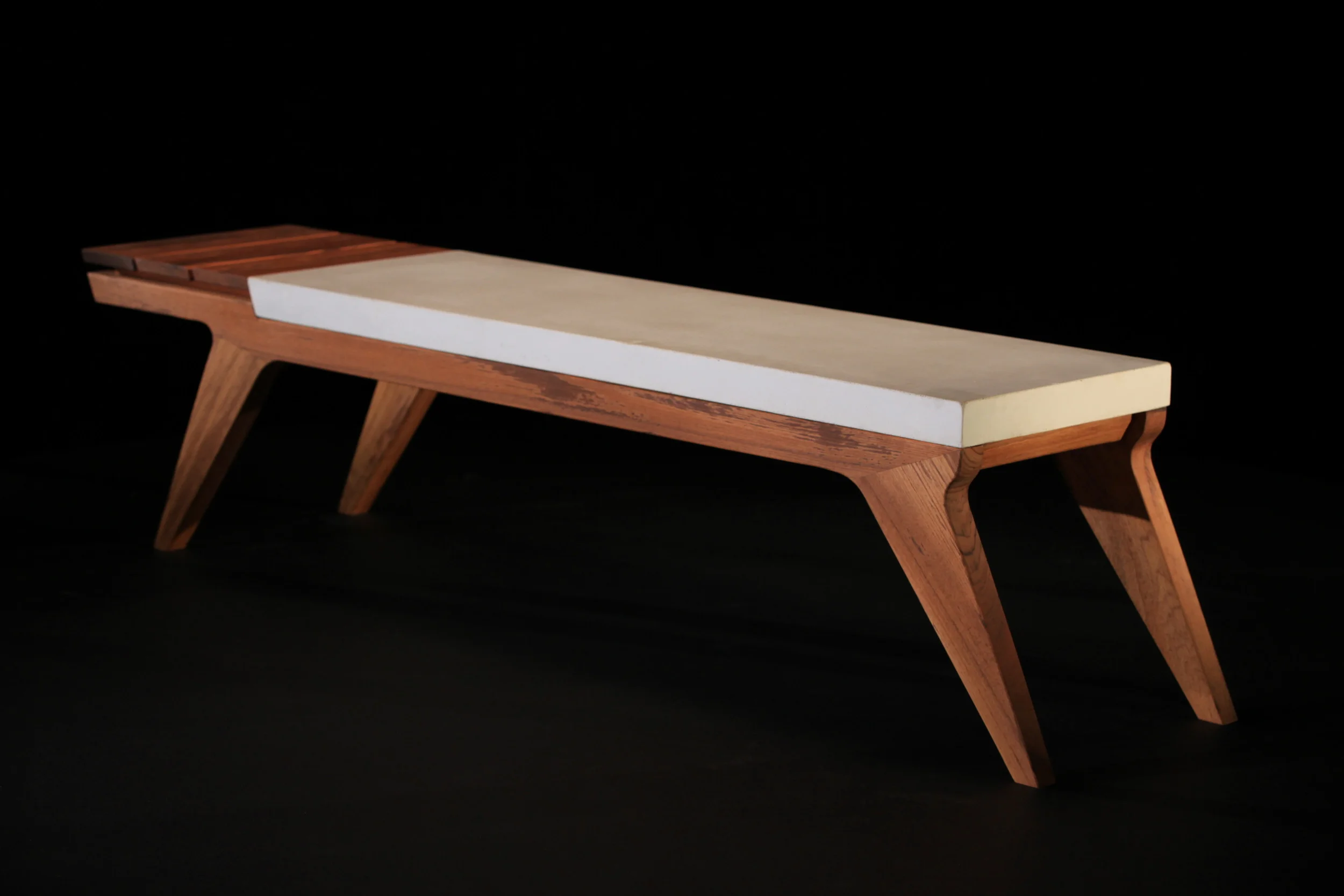
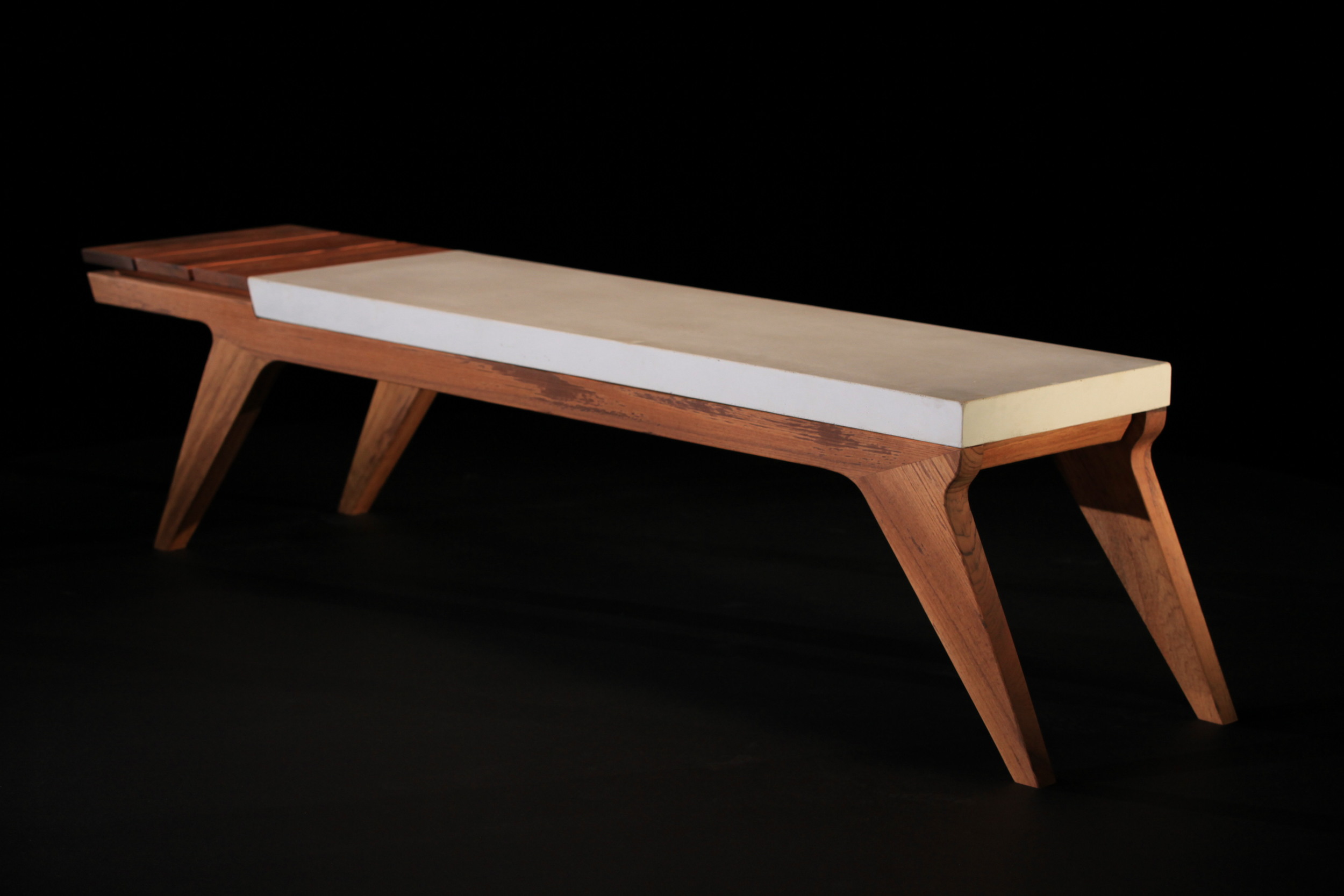
With 18 hours left, I resorted to building a familiar looking bench. I took two of my designs, the comfortable Silence and the Fast Freddy and made a hybrid. I have made both of these benches numerous times, so it was easy; maybe even a cop-out.

To start, I sketched out the shape of the piece on MDF and cut it out to use as a template, then made a second as a duplicate. With the duplicate, I cut it into pieces where the joints would be. And then cut out those pieces (with 1/8-1/4" extra on the edges, not on the joining areas) out of 8/4 (2") Teak, joined with the Domino, and clamped it up.

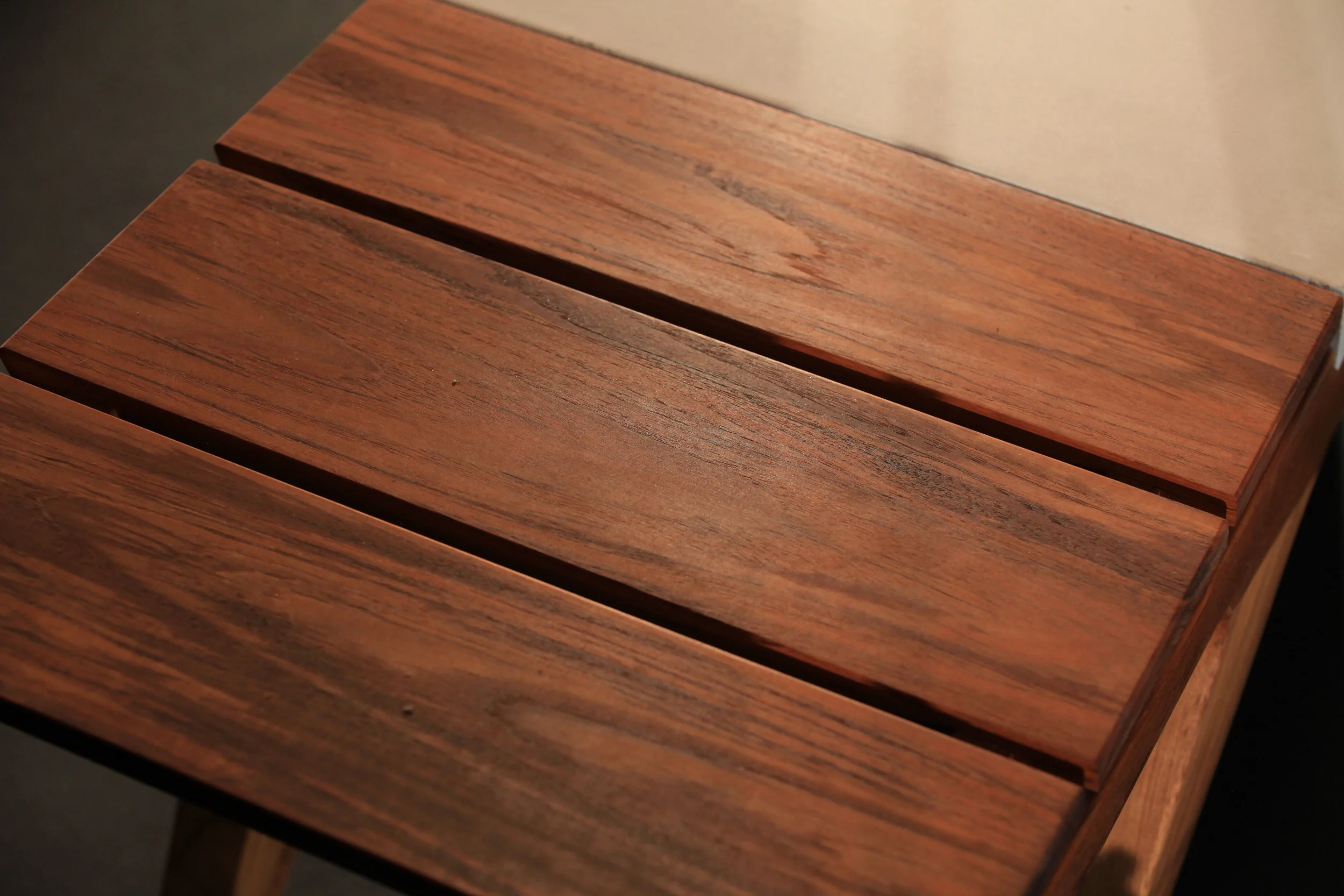
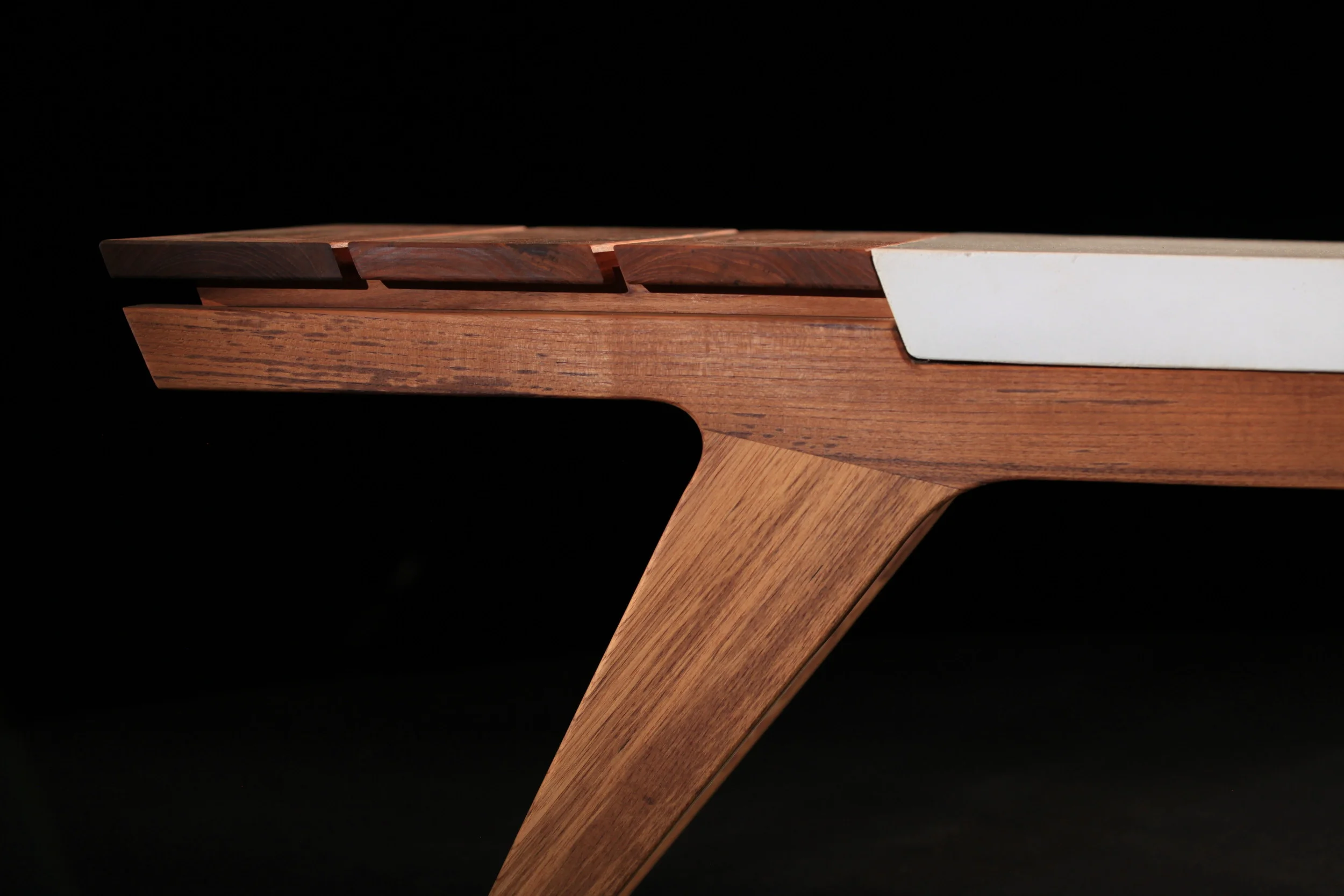
After glue was dry, I placed the un-cut template on top of the teak and with a straight top-bearing router bit, I cleaned up the extra material and made the teak the exact shape of my template. I did this for each part of the legs. Then, I cut slats for the table part, attached them and was just about done with the base.

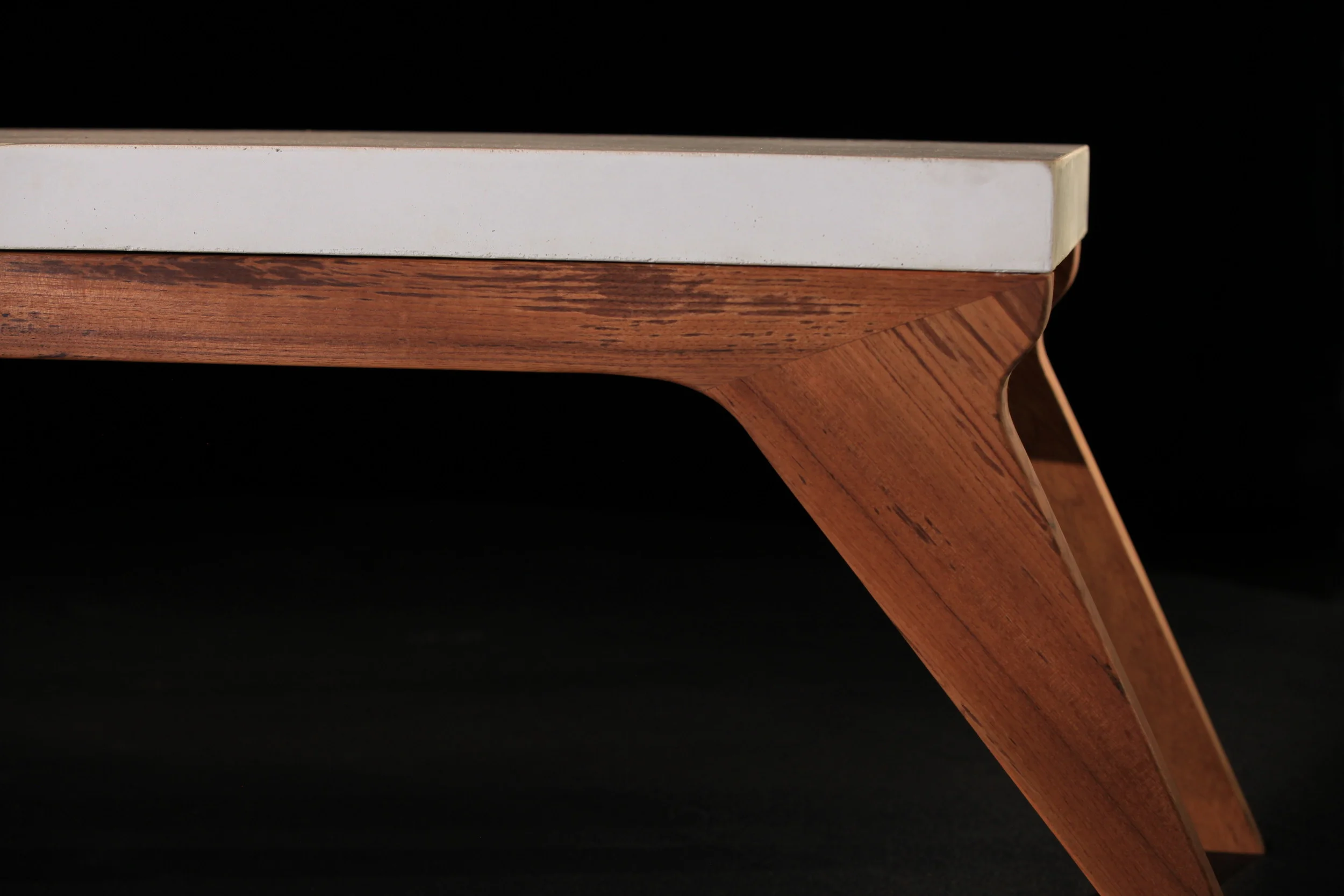
I quickly made a mold for the bench seat out of melamine. And luckily, I had brought my hopper gun for concrete projects; I like doing GFRC because you don't have to vibrate it and can still polish the top. Personally, I like to see a little aggregate on the top, otherwise, I feel like the concrete ends up looking like a composite material without much soul. I sprayed the form using the Buddy Rhodes mixture, this is the first time I had used this stuff and it took some getting used to. Once I got the hang of it, I was impressed, it allows you to do things that normal mixes won't allow. I finished the concrete pour by the end of the day.

The next day, we only had a few hours left. I took off the concrete form, polished and sealed the seat. While the sealer was curing, I routed 1/4" round on all the edges of the teak base, sanded it to a 320 grit and finished it with Teak Oil. The seat was then bolted to the legs using 3" carriage bolts that I had set into the concrete while it was curing.

Framework Episode 5: Recap

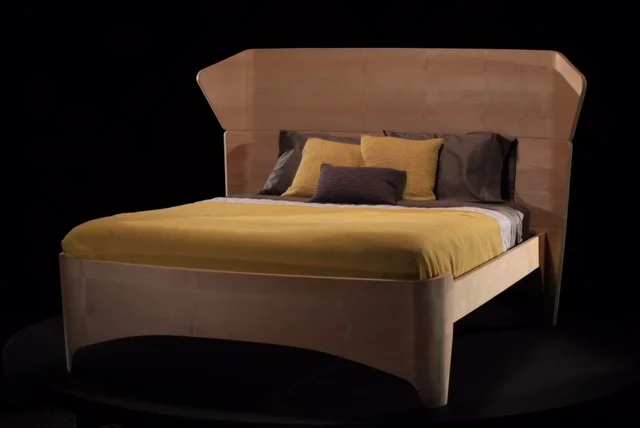
The Reproducible Bed

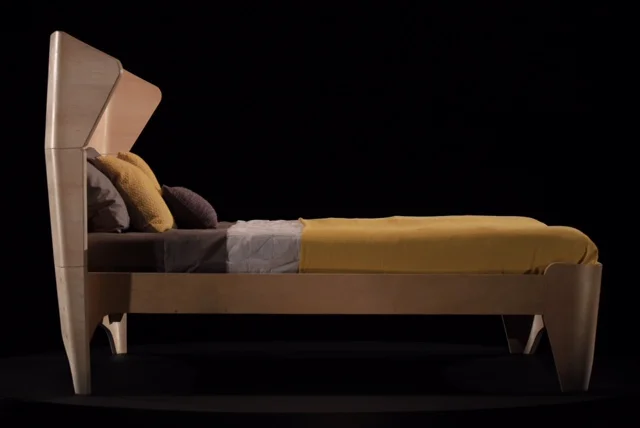
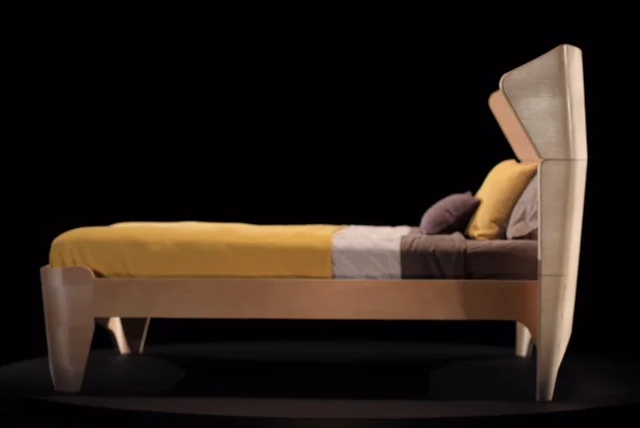
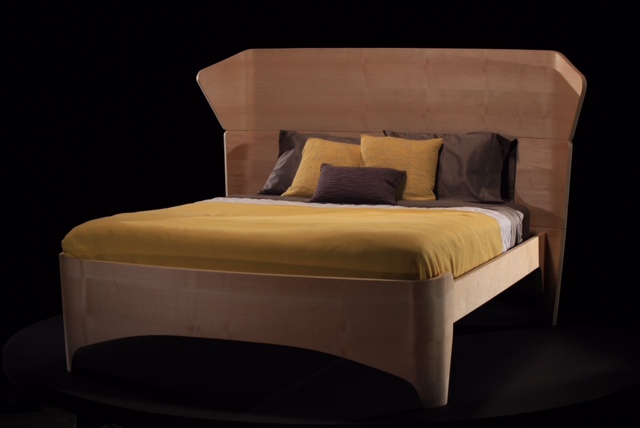
Framework episode 5 Bed

The difficulties in this fifth episode of Framework were not only in the time-restraints put on us, but also that we were put together in teams of three. You would think that more people on a project mean less work, but that definitely wasn't the case!

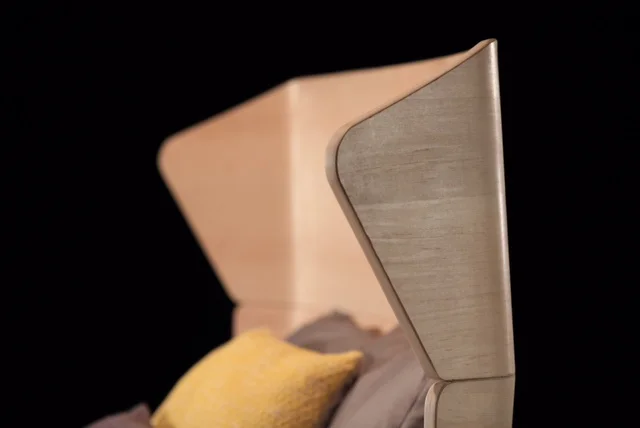
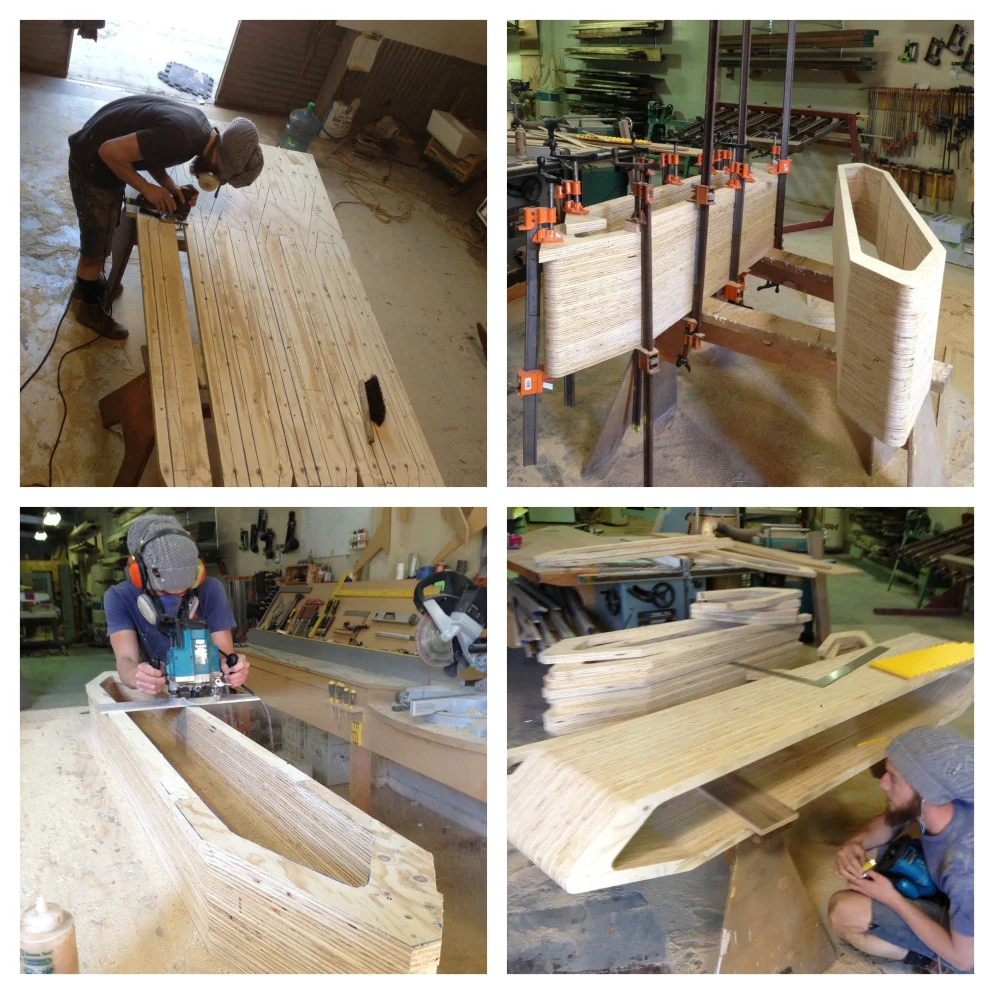
As I write this, I struggle to explain or even make sense of how things went down and why; when even, at the time, I couldn't make clear sense of it. I don't want to get carried away with any of the drama because  the whole reason for the blog recaps is to give insight a bit into the process. Unfortunately, the process on this one was filled with one problem after another. Considering the capabilities of the people I was working with, we definitely took on more than we would handle; for starters, none of us had ever worked with bent plywood, it's normally somewhat of a simple process, but without the proper practice, knowledge and drive, it can be hard to pull off, especially under a time limit.

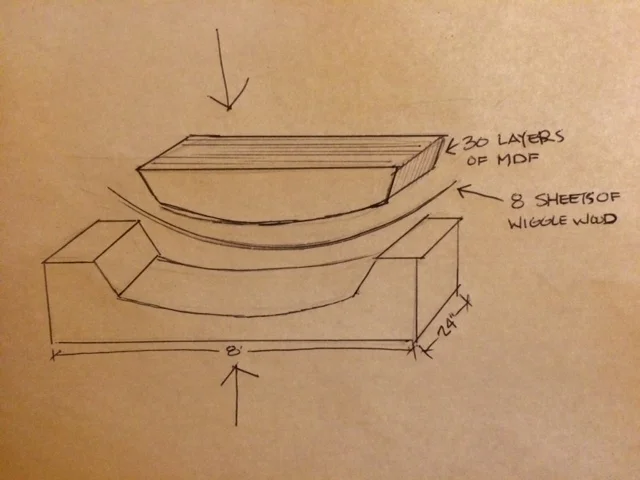
After collaborating and coming up with our design, I created what I call the "mother template"; this was our design, traced out on a sheet of 3/4" MDF from the perspective as if you were looking down on it. The goal was to make two forms where we could sandwich 8 pieces of 1/8" wiggle wood (bendable plywood) in between them. Since the headboard and footboard were different shapes, that meant we needed two forms, a total of 4 of these parts.

In order to make the form, you need to take one piece, rough cut it to the shape, then router it to the mother template, so that each piece is exactly the same. For each part in the form, we needed around 30 layers of MDF. So, when all was said and done, I did this to over 120 pieces of MDF; it is extremely important that each piece be exact because if there are any voids in the form, then there would be bubble in the veneer that we placed over the wiggle wood. After all the layers were router-ed to the same shape, we screwed each piece to the next and created our form; we were then able to place the 8 layers of wiggle wood (with glue in-between) and a layer of Birch veneer into the form, then place the other form on top. Being that there were so many layers of MDF to these forms, we had to use the forklift in order to get the top form on and off.  Lastly, we clamped the two parts of the form together until it was absolutely tight.

Framework episode 5 design

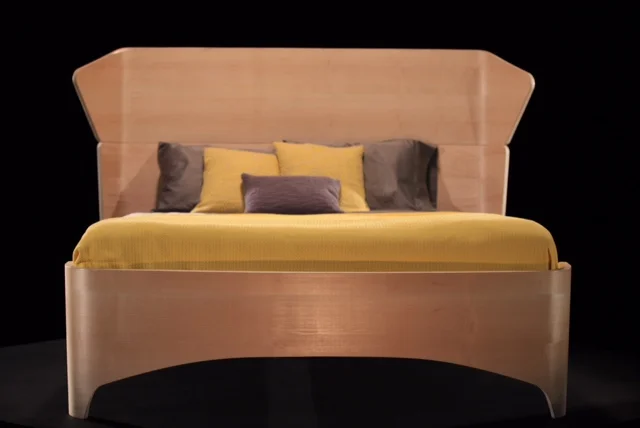
For each bed, it took four of these bent plywood shapes, 3 stacked on top of each other for the headboard and one for the footboard. Attaching the headboard together was particularly difficult because the curves were compound. So, in order to attach them, I had to scribe one to another and when it wasn't completely tight, I took a cordless skil saw and ran the blade in-between the two until it was tight. I then used the domino to join each piece together. 

I really need to stop here to explain something. As I am writing this, and playing back this challenge in my mind, I realize what a huge task we had taken on. There was so much I learned from this episode that I'm not exactly sure why I am explaining how to do something that I did wrong; there are so many better ways to do what I did, so I hope that no one thinks that this was the best way to pull something like this off. Everyday in the shop, I learn something new; if not about wood, then about myself. Most of these lessons I learn the hard way. And I typically keep these learning experiences to myself because they tend to be full of stupidity, lack of knowledge, or thoughtlessness. This bed challenge is just another great example of this, all except for the part of keeping it to myself!

Although most of my learning experiences are either humbling, time consuming, costly, or all of the above, they are always worth it. In the case with this bed, I am looking forward to learning how to pull off bend plywood in the correct way that is successful. Come to find out, it takes some time... much more than 24 hours.

I hope if anything, you learned what not to do.


Framework Episode 4: Recap

The Innovative Entertainment Center

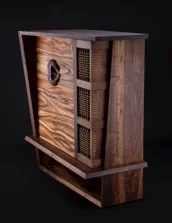
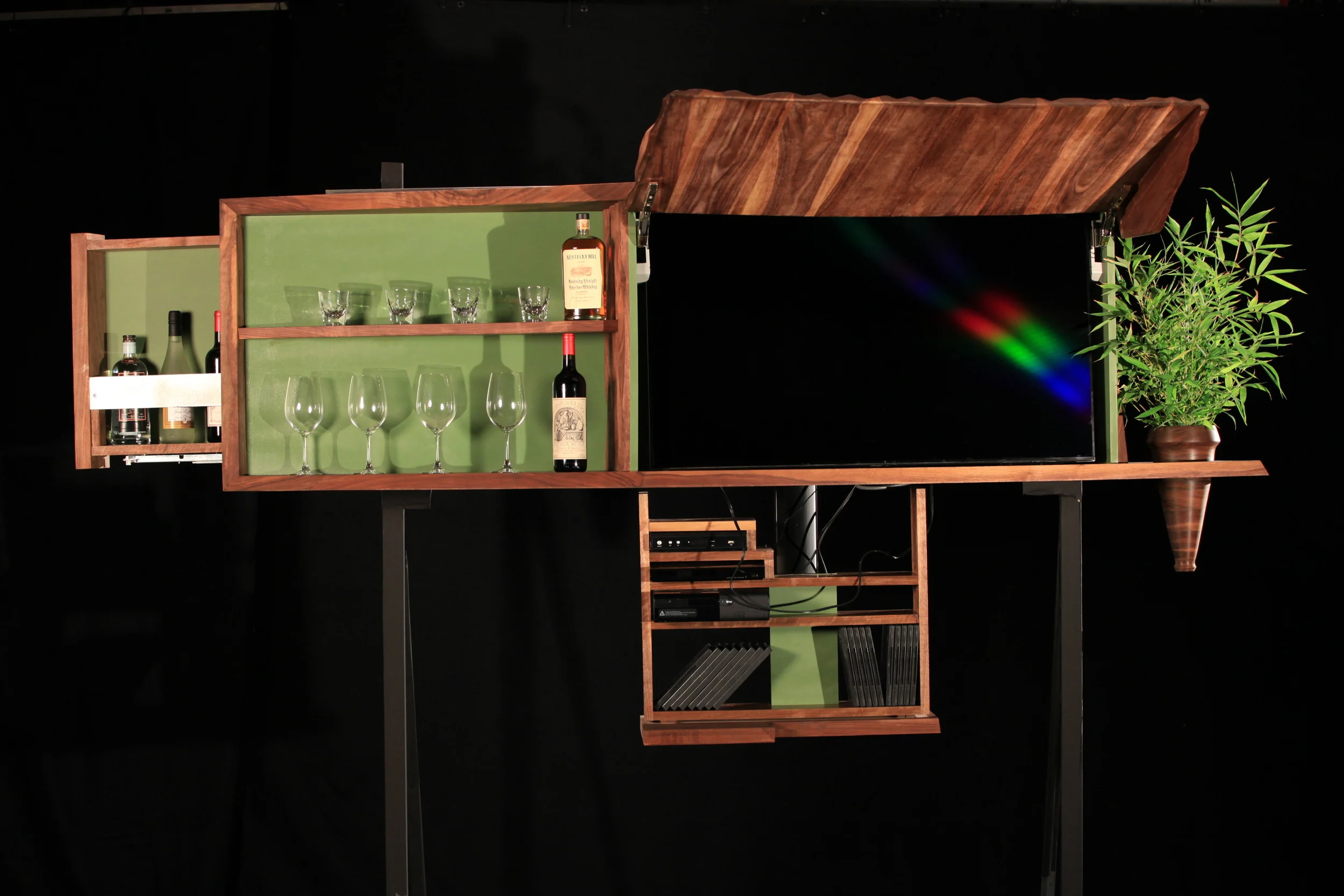
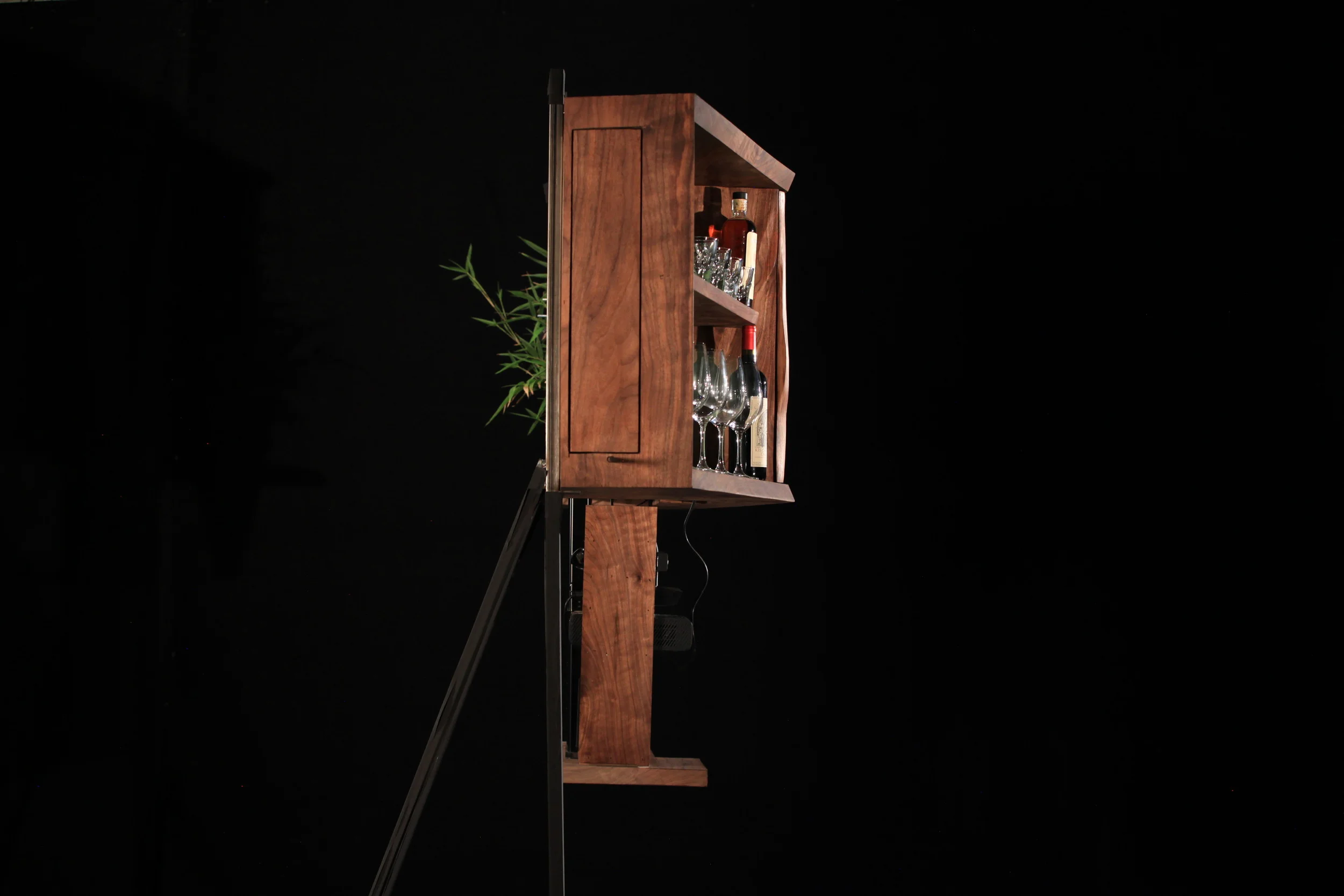
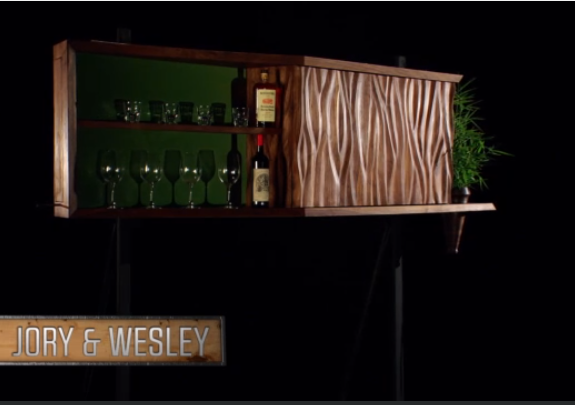
Last week's episode of Framework challenged us to build an innovative entertainment center in 24 hours, and with a partner. Being that I won the last challenge, I chose teams and picked Wesley, mostly because I felt he could pull off the mechanisms of the piece, while I focused on the build. Our idea was to design and build a sleek wall-hanging piece that at first glance did not feel or look like a TV cabinet and that the mechanics and movements would make it unexpected, interactive, and innovative.

Typically, I tend to avoid common angles, edges, and lines in order to not only make the piece unusual but also give it unique character; thus leading to a much more difficult time in the building process. So, combine the difficult build with the mechanisms not working out how we planned and certain hardware not showing up, the piece quickly became a stressful disaster.

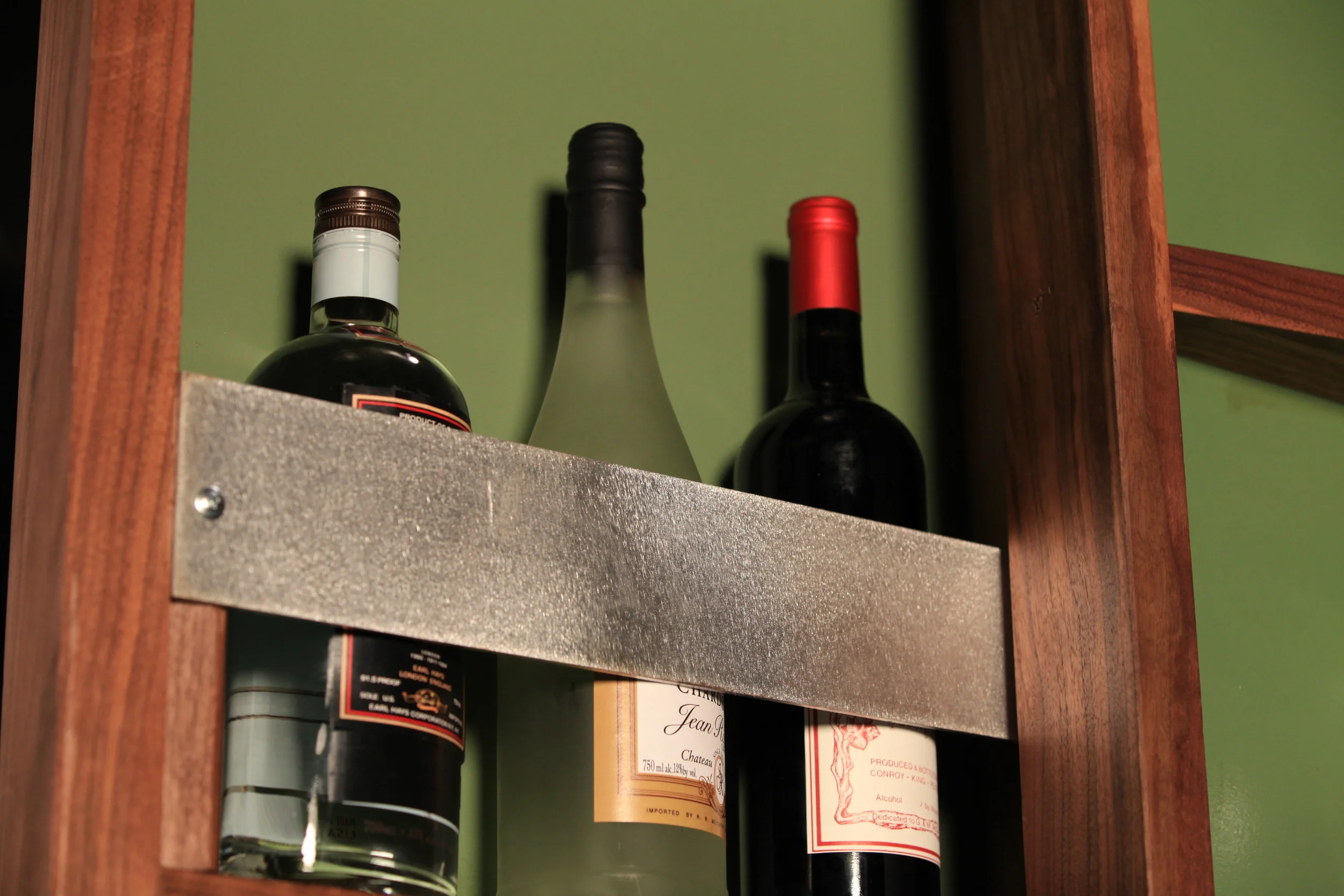
The Body: the entire outside was built with 6/4 (1 1/2") solid walnut and had a 20 degree chamfer on it in order to frame everything in it. After joining the body with Dominos and clamping it, we began to piece the rest of it together.  I used the router to dado in the right vertical side as well as the middle divider. On top of that, we also dado-ed in the false plywood back which ultimately hid the liquor stash that had a poorly chosen unattractive  green paint on it.

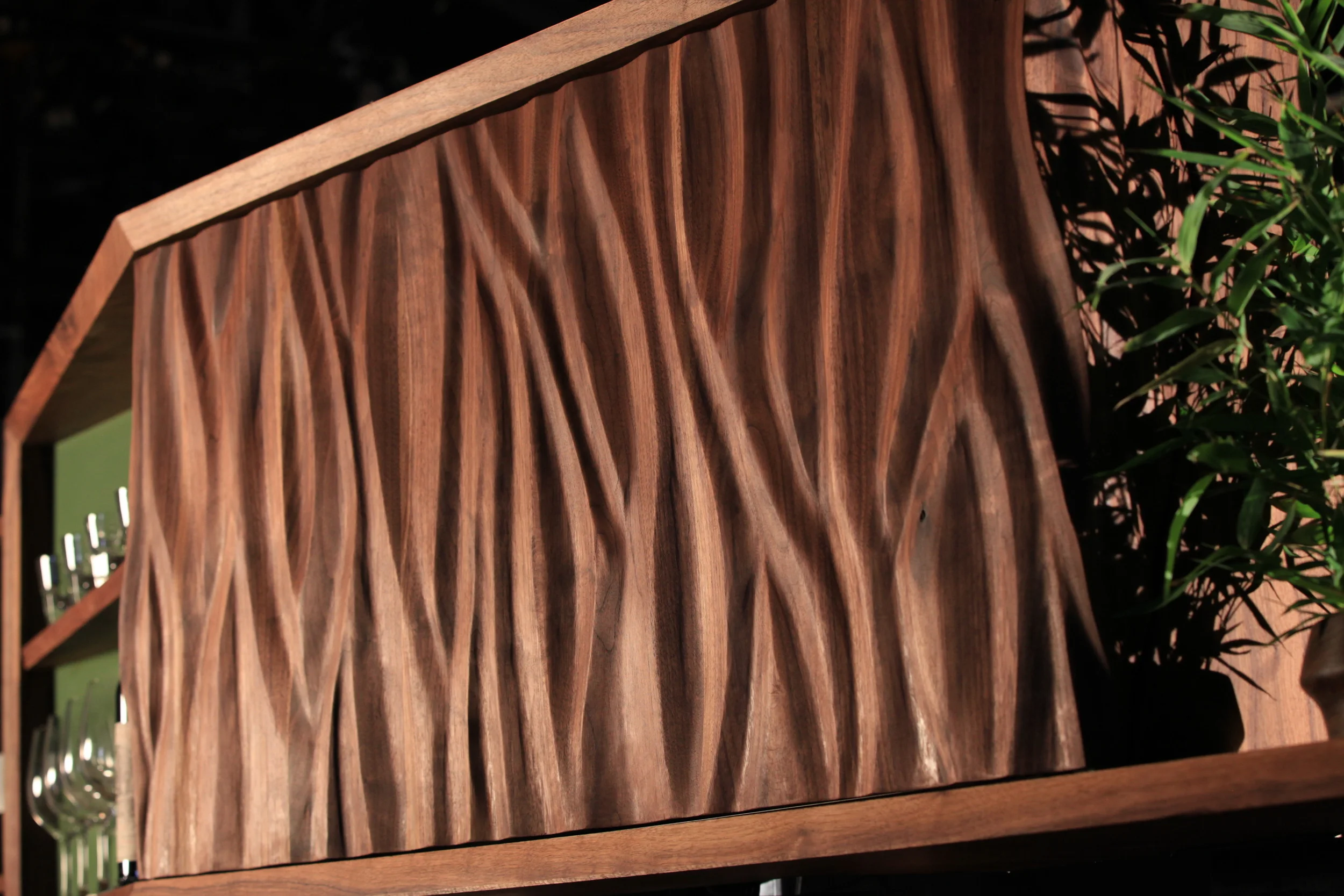
The Door: this, of course, was the focal point; I joined solid walnut, then carved in an organic texture, following the grain to give it a natural feel. We had ordered the Blum Aventos HL hinges, (which allows the door to move almost directly vertical from its current position) but these hinges were out of stock and we we running short on time. This forced us to use the Blum Aventos HK system (which flips the door open) making the door a bit obtrusive, but being that we were on a strict time limit, we needed to just finish the piece.

The Components: we made a drop-down housing to hold the gaming system, cable box, DVDs, etc. In order to make this function, we relied on using a lift system for a TV, but flipped it upside-down. Serious issues arose with this feature, but we don't need to go into that. Also, for the secret bar pullout, we had planned on using the Blum Servo Drive, but for some reason, that failed too (and I'm still not sure what happened).

The Vase: made out of solid walnut, I took stacks of 8/4 (2") walnut and shaped it on the lathe. After hollowing out, I coated the inside with silicone to seal and make it capable to hold water.

The Finish: usually, I don't use oil with pigment in it, but in this case, I felt a darker color on the body would showcase the carving on the door a bit more, so I used the Watco Dark Walnut Danish Oil.

All in all, this was a really tough piece to pull off in the 24-hour time restraint; the project was riddled with things that went wrong and in the end we didn't have time to make this piece look and work the way we wanted. This is a great example of something I would NEVER allow out of my shop in the condition it was in, which is too bad because I didn't mind the overall design, it was the execution that I was not too proud of.


Framework Episode 3: Recap


Above is a teaser from the last episode; to watch the whole thing, head over to SPIKE.COM


So, once again most of the building process of the 3rd episode of Framework was filled in with Freddy Hill talking about things that I've already forgotten about. But, luckily for me, most of the drama was trumped by the memories of things that I love... creating things.


Now on to the details and the interesting part for those who love to create.


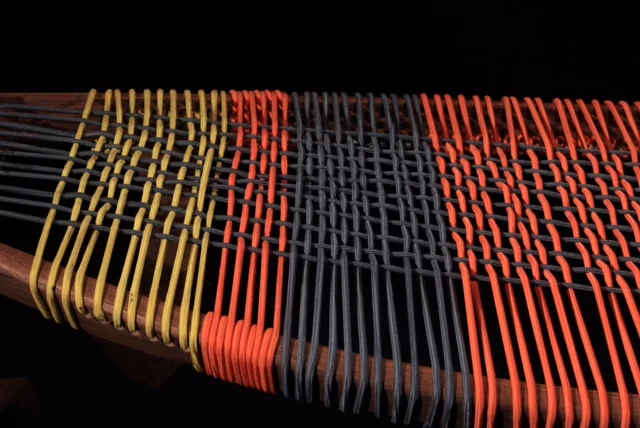
The material I received was a nest of bungee cords, varying in sizes and color, to work with. If you know anything about me, I chose them because of the colors, it's almost embarrassing to admit it, but I truly get fired up and inspired by color. It's like, almost immediately, my brain is firing on a couple extra cylinders!


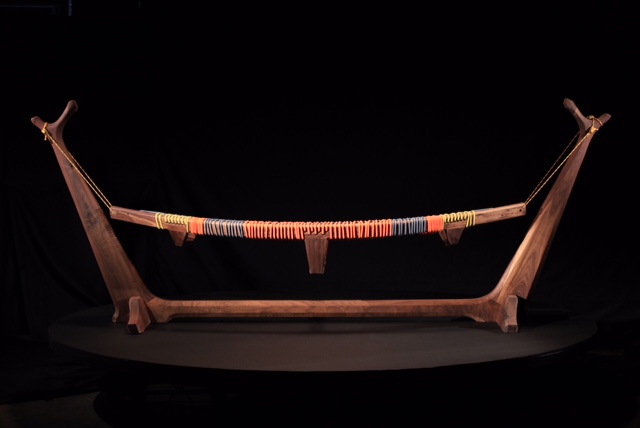
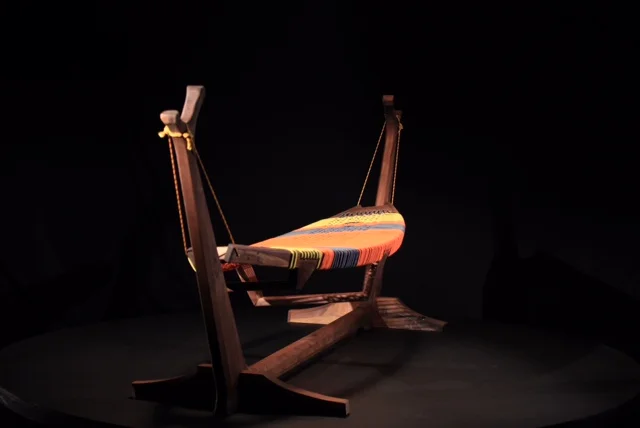
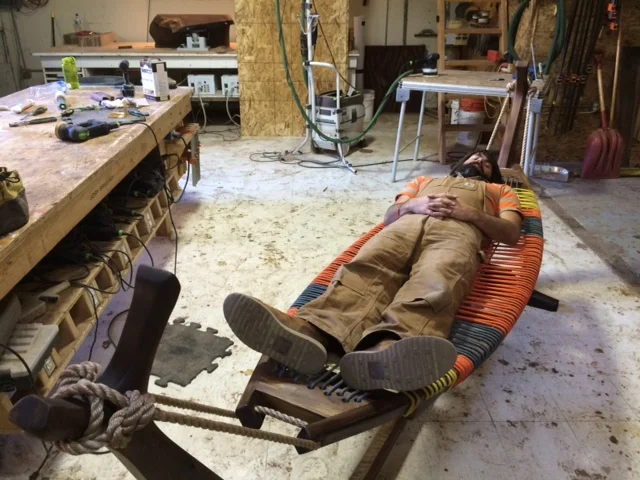
I like pushing the limits and stretching myself, so when I decided on the Hammock, I knew it was going to be a close call to finish within the allotted 24 hours.


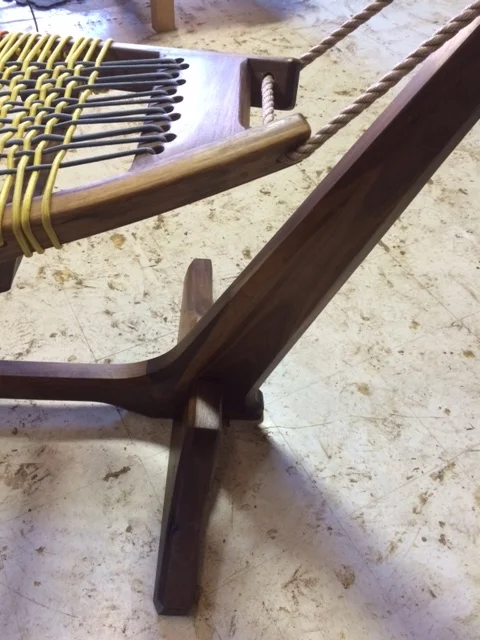
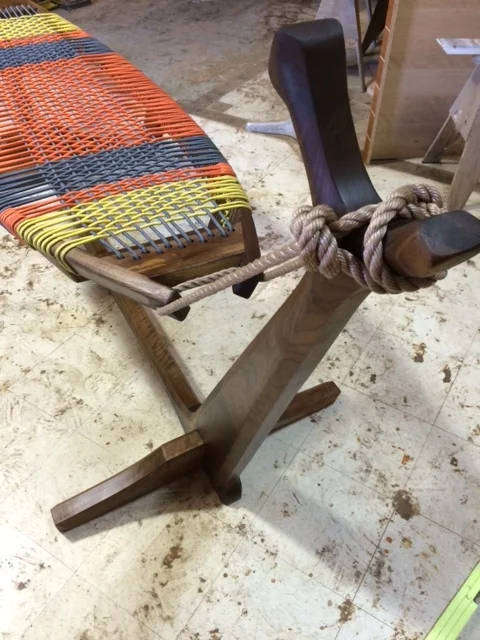
Knowing how much time is needed to bend wood, I started working first on the frame for the hammock; I ripped 8 slices of walnut 3/8" thick and took 4 for each side to make a glue lam. I screwed blocks of wood into the table spacing them about a foot apart making a radius (about a 14-16' radius), then clamped it every few inches to sit overnight. In the morning (2nd day of the build and 4 hours into the 24), I had my frame, then connected the ends and the middle with stretchers, completing the swinging part of the Hammock frame.

As for the bungees, each cord had a plastic hook with a metal core on the end, so for each cord, I had to use the bandsaw and cut these hooks off, it was such a hassle and took me precious hours. After the hooks were off, I knew I need the longest bungees to stretch from end to end of the frame, but unfortunately, the longest bungees were only 4 feet long. So, by the time I stretched them from end to end,they were pretty taught; if I would have had longer bungees, the hammock would have sunk a bit when laying in it, making it a bit more comfortable, but sometime you have to work with what you have. Lastly, for the frame, I wove through the other bungees from one side to the other, interspersing different colors.

For the base, I ordered 12/4 (approx 3" thick) walnut lumber, I had made templates of the overall shape from 3/4" MDF, then copied that shape onto the walnut and cut it where I was planning on having joints to connect it. I was left with 3 pieces, the two arms and the horizontal rail that connects them. Since many time hammocks are hung using trees, I wanted to give this one an organic feel, so I shaped the arms to resemble branches a bit and planned on hooking my hanging ropes to these branches.

The Festool XL Domino really helped me out on this one, allowing me to join these huge pieces of wood together and in a short amount of time too. Once the Titebond 3 glue setup, I placed my template on the base and cleaned up the edges using a top-bearing straight bit not he Festool OF 2200 router. This is when things got sticky. That 12/4 walnut has some crazy grain and kept wanted to splinter out. Normally, this is a good example of when to take your time, but I didn't have the luxury and ended up paying for it. In the end, I had to glue back in the splintered part and had a bit of time to clean them up.

To finish it off, I sanded, skipping more grits that I want to remember. And once again, I only had time to put on one coat of the Sam Maloof Oil, making me cringe a bit, but finishing the hammock in the allotted time. 

A couple months after I finished the hammock, they sent it to Miami for Art Basel, and on its way, they made sure it came by my shop for a couple of days, where I wad able to give it a proper finishing job and some nice hanging ropes.


Framework Episode 2: Recap

First off, if you did not watch Episode 2 of Framework, you can watch the teaser clip below, or go to SPIKE for the whole episode.


I know I promised, and even though its been a some days since the 2nd episode of Framework aired, I wanted to give some details on the piece, for those of you who are interested in the more technical aspects of it.

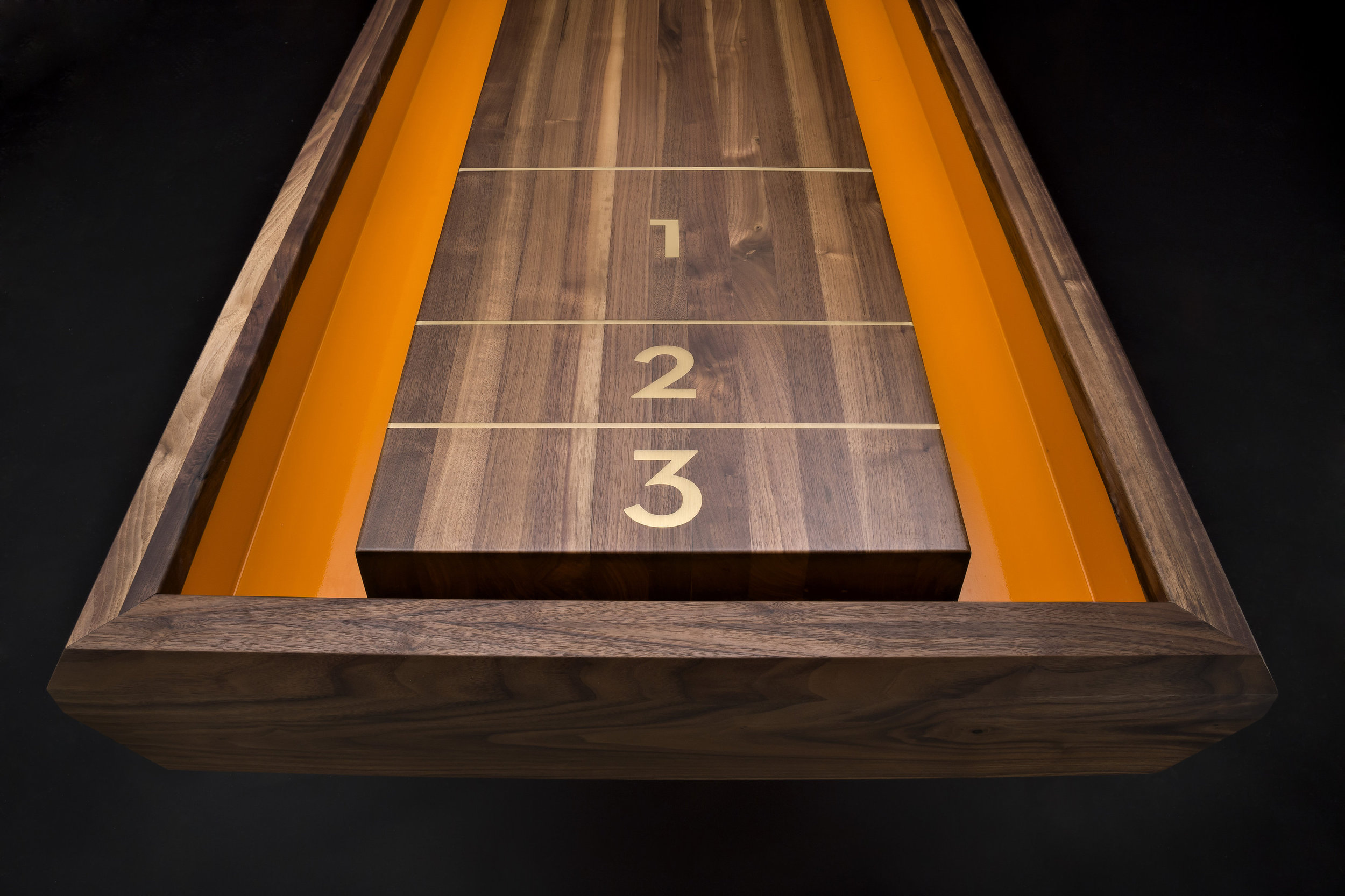
The Challenge was to build a Ping Pong table for the Standard Hotel in L.A. It was especially fun, not because I am into Ping Pong or because I have ever built a Ping Pong table, but because it gave me the opportunity to play around with some of my favorite elements and styles.

I have stayed at the Standard before and have always appreciated there style, even though it's a bit hard to categorize. The Ping Pong Club, on the other hand, is not; the style is fairly mid-century with old black and white photos from the 1950' and 1960's of Hollywood icons. For me, the concept and design were not too difficult, but the build, that was different. Not only are you trying to build furniture in 24 hours, but you are constantly working with tools and even people that you are not familiar with, making the 24 hour period seem even shorter.

As you may know, the table was made of walnut, and the top, in order to discourage sagging, we made a makeshift metal frame, used MDF as the core, skinned it all with 4 quarter walnut, and then added 1/4'' strip of brass flat bar down the center.

In the last 6 months, I have been dabbling with danish cord, mostly for weaving seats, but there is so much more possible with this stuff than only seating. Something about the look and color of the cord is so timeless to me. Being that the net was the focal point of the piece, I really wanted to make it unique and it was a blast to make. Truthfully, without the Festool Domino and their tiny 5mm dominos, there is no way I could have joined all those small intricate angle together. I had made a 5/8" groove on the top of the net, wove in the Danish Cord, then willed in the groove with a thin strip of brass to match the accent on the table top.

As for the legs, they are composed of 8 quarter walnut, I would have liked to use 12 quarter, but being that they had to order it, I had to wait too long and with a 24-hour build, there was no time to waste. I used a 15 degree chamfer bit for the bottom stretch of the leg, for the top and side part, I used a 3/4” quarter round.  I also tapered the legs making it thicker at the part where it attached to the table; thiner where it met the floor. I joined the vertical part of the leg with the vertical rail by using the domino XL, pretty much using a 5” tenon to keep it all together.

And to wrap it all up, we used the Sam Malloof Finish, which I really like. One of the terrible parts about making furniture in 24 hours is that we only had time for one coat of oil; for most woodworkers, putting on one coat of oil pretty much kills your soul, we all know how much better a piece gets with each additional coat, but time was of the essence. Still, I'm pretty sure Sam Malloof probably was rolling over in his grave.


It's time to bring new ideas to an old game as the builders are tasked with having to design and build innovative ping pong tables. Catch new episodes of "Framework" on Tuesdays at 10/9c! Don't worry if you miss one: you can watch full episodes on the Spike App (http://www.appstore.com/spike).


The Chromatic Collection on Super 8 Film

Filmed completely on Super 8 film, this is an insight into our photo shoot on The Chromatic Collection http://www.jorybrigham.com/chromatic Music by: Andrew Barefoot


A good photoshoot is an essential compliment to building the furniture that we do; but on top of that, we also love to make it fun.  So, to welcome in The Chromatic Collection in the furniture family, we decided to bust out the old Super 8 Film camera and do a vintage video on our time out in the middle of nowhere. 

Thank you to The Cana Family for another set of incredible photos.


AND if you think this video is too long, here is the short version from Instagram. ( To see all the going-ons at Jory Brigham Design follow on Instagram @jorybrigham_design )


Episode One: Recap

Last night was the premier of Framework. We don't even own a TV so my Reality TV knowledge is pretty weak. It was nerve racking but I thought they did a great job. Thanks Spike for making my "boat chair" look better than I remember, although it still hurt to look at for me.  

It was the first episode, so naturally they spent a lot of time on introducing everyone and helping people "get to know" the contestants. There was very little time for the content I am looking forward to, which is the woodworking. 

Driving to work this morning I decided I am going to try and focus my blog on the process of what we did on Framework. There will be plenty of drama but I learned so much from this experience that I want to share. Things that have made me a better designer. They can't fit everything into 42 minutes, so I think it could be fun to fill you in with a few interesting details that made this show so interesting for me. 


See you next Tuesday. 
 

Jory

Framework!


Starting September 3rd, I have been involved in making a TV show called Framework, the first episode airs tonight on Spike and will run for ten weeks. The entire experience has been a blast, but not without a few really insane situations that made be question "what the heck I am doing here?" It went against everything I thought I new about the creative process.

I have always had the pleasure of taking my time, waiting for the perfect creative-inducing situation, and then I would start designing. Typically, I even sleep on it before I get to building. My biggest fear was that I would encounter a monster creative block and I would choke on national television.... in front of millions of people. I just started thinking about how much shit I would get from all those friends who are looking for some payback . After considering all the challenges I would face I figured it would be uncomfortable enough to make for a great experience. I was not let down!

There will be pieces I wish I could forget about, and there are some I am proud of. I learned so much that I'm looking forward to putting to use. Not having been to school for what I do, it was great to be around those who have. It was always interesting to me how we think so different when it comes to design. Who know there are so many "rules" and perimeters that people follow when it comes to design?

Check it out, Tuesdays 10pm on Spike.

The Process : HL 850 Planer by Festool

I often get questions about my process. And when it comes to woodworking there are a lot of ins and outs.  Every couple of weeks I'll be shedding some light on how, why and what I use to craft my furniture. These posts will sometimes be videos, articles, and maybe just a quick picture of the tools and products that are essential to my work.

So without further rambling, feast your eyes on: